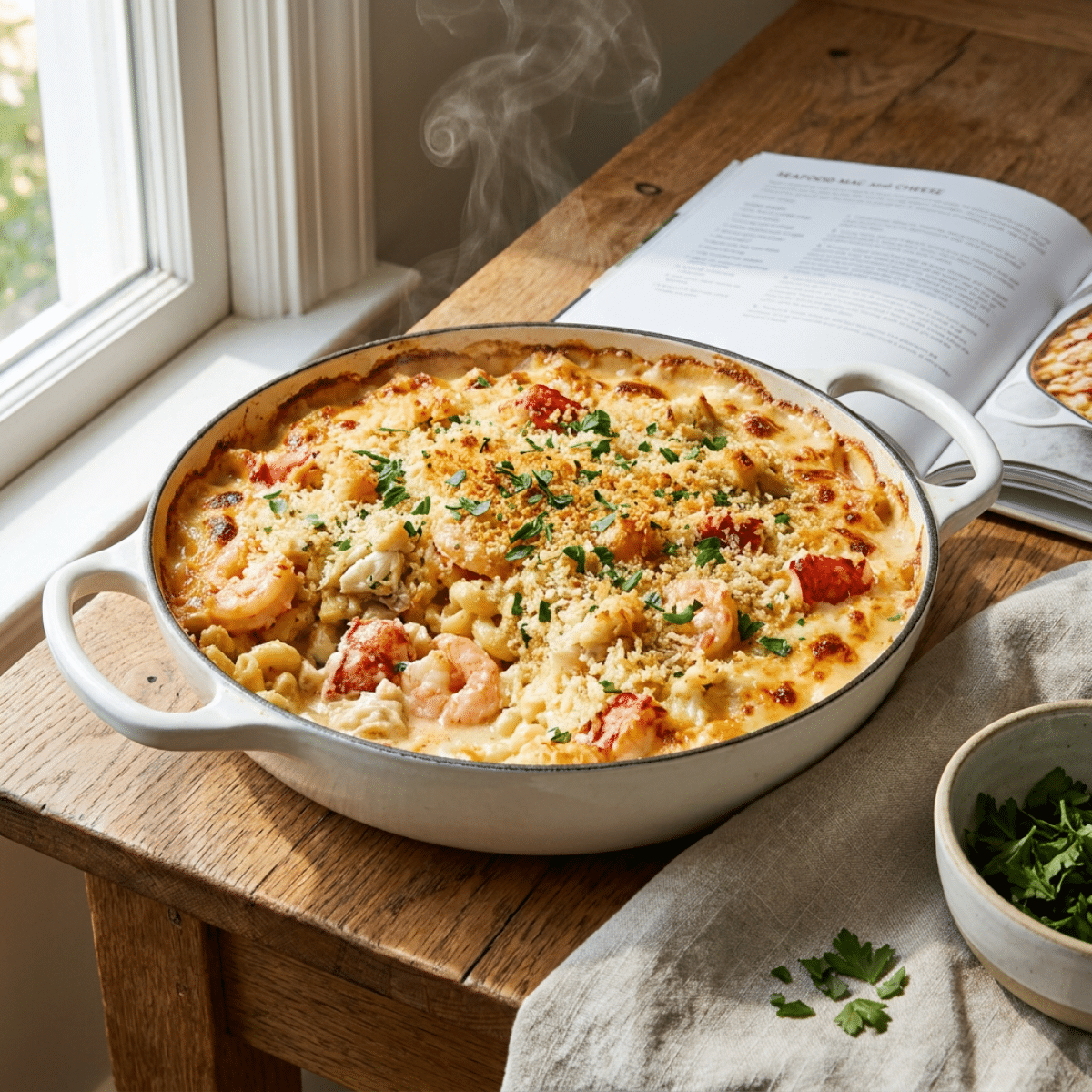
Seafood Mac and Cheese is the kind of comfort food that never fails to impress. Have you ever taken a bite at a restaurant and thought, I wish I could make this at home? I know I have. After testing countless versions over the years, I realized the secret isn’t using fancy ingredients. It’s all about balancing perfectly cooked seafood with a smooth, creamy cheese sauce that coats every piece of pasta without feeling heavy. Once I found that balance, this recipe quickly became one I returned to for family dinners, holidays, and special celebrations.
Whether you choose shrimp, crab, lobster, or a combination of your favorite seafood, this baked Seafood Mac and Cheese delivers rich flavor, a golden, crispy topping, and an irresistibly creamy texture. In this guide, you’ll learn how to make Seafood Mac and Cheese from scratch, discover expert tips for flawless results, and explore easy variations to make the recipe your own.
Table of Contents
Ingredients for the Best Seafood Mac and Cheese
The secret to unforgettable Seafood Mac and Cheese starts with choosing high quality ingredients. Since this recipe relies on a handful of simple components, every ingredient plays an important role in creating a rich, creamy casserole packed with flavor. From tender seafood to perfectly melted cheese, using the right combination will give you restaurant quality results without making the recipe complicated.
Choosing the Best Seafood
One of the best things about this recipe is its flexibility. You can prepare it with a single type of seafood or create a luxurious blend that offers different textures and flavors in every bite.
The most popular choices include:
- Lobster for a rich, buttery flavor that’s perfect for special occasions.
- Shrimp for a sweet, tender bite that pairs beautifully with creamy cheese sauce.
- Lump crab meat for delicate seafood flavor without overpowering the dish.
- Scallops for an elegant addition if you’re preparing the recipe for guests.
For the best texture, always use fully cooked seafood before mixing it into the pasta. This prevents the seafood from overcooking while the casserole bakes and helps it stay tender and juicy.
The Best Cheese Combination
A smooth cheese sauce is what transforms ordinary macaroni into exceptional Seafood Mac and Cheese. Instead of relying on a single cheese, combine two or three varieties to build both flavor and creaminess.
Some of the best melting cheeses include:
- Gruyère for its nutty, buttery taste.
- Sharp cheddar for bold, classic mac and cheese flavor.
- Parmesan for extra richness and depth.
- Fontina for an incredibly silky texture.
Whenever possible, grate the cheese yourself. Freshly shredded cheese melts much more smoothly than pre packaged varieties, which often contain anti caking agents that can make the sauce less creamy.
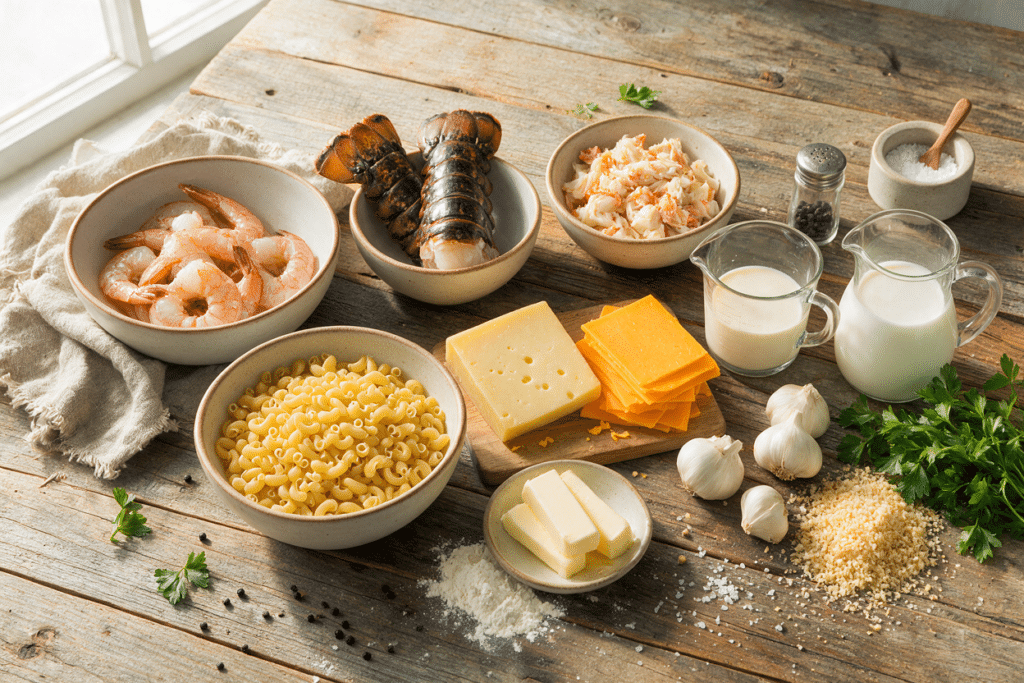
Pasta, Dairy, and Crispy Topping
Elbow macaroni remains the classic choice because its curved shape captures plenty of creamy cheese sauce. However, shells, cavatappi, or corkscrew pasta also work well since they hold onto every delicious bite.
Whole milk and heavy cream create the luxurious consistency that makes this recipe so satisfying. Butter and flour form the base of a classic roux, ensuring the sauce stays smooth and velvety from the first spoonful to the last.
To finish the dish, a layer of panko breadcrumbs mixed with melted butter adds a crisp, golden topping that contrasts beautifully with the creamy pasta underneath. If you enjoy Southern style casseroles, you can even sprinkle a little grated Parmesan or Old Bay seasoning over the breadcrumbs for an extra burst of flavor.
How to Make Seafood Mac and Cheese
Making Seafood Mac and Cheese from scratch is much easier than you might think. The process comes down to preparing the pasta, creating a silky homemade cheese sauce, folding in cooked seafood, and baking everything until the topping turns beautifully golden. Follow these simple steps for a creamy, flavorful dish every time.
Step 1: Cook the Pasta
Bring a large pot of salted water to a boil and cook the macaroni until it’s just al dente, following the package instructions. Since the pasta will continue cooking in the oven, avoid overcooking it at this stage. Drain well and set it aside while you prepare the sauce.
Step 2: Make the Creamy Cheese Sauce
In a large saucepan, melt the butter over medium heat before whisking in the flour to create a smooth roux. Cook for about a minute to remove the raw flour taste, then slowly pour in the whole milk and heavy cream while whisking continuously. Once the mixture begins to thicken, gradually stir in the Gruyère and sharp cheddar, adding one handful at a time until the sauce becomes smooth, rich, and velvety.
Step 3: Add the Seafood
Remove the cheese sauce from the heat and gently fold in the cooked pasta along with your seafood. Shrimp, lobster, crab, or a combination of all three work wonderfully in this recipe. Stir carefully so the seafood stays in large, tender pieces instead of breaking apart.
Step 4: Assemble and Bake
Transfer the mixture to a lightly greased baking dish and spread it into an even layer. Mix the panko breadcrumbs with melted butter, then sprinkle them evenly over the top. Bake until the casserole is hot and bubbling and the breadcrumb topping becomes crisp and golden brown.
Expert Tips for the Best Results
A few small details can make a noticeable difference in the final dish.
- Bring the milk and cream closer to room temperature before adding them to the roux for a smoother sauce.
- Freshly grate your cheese for the creamiest texture.
- Always use cooked seafood to prevent it from becoming tough during baking.
- Taste the cheese sauce before combining everything and adjust the seasoning if needed.
- Let the casserole rest for about five minutes after baking so the sauce can thicken slightly before serving.
Can You Prepare Seafood Mac and Cheese Ahead of Time?
Yes. You can fully assemble Seafood Mac and Cheese several hours in advance and refrigerate it, covered, until you’re ready to bake. If baking directly from the refrigerator, simply add a few extra minutes to the cooking time to ensure the center is heated through. This make ahead option is especially convenient for holiday gatherings, family dinners, or entertaining guests, allowing you to spend less time in the kitchen and more time enjoying the occasion.
Seafood Mac and Cheese Recipe (Creamy & Easy to Bake)

Ingredients
- For the Pasta
- 1 pound 454 g elbow macaroni
- ½ cup unsalted butter divided
- ½ cup all-purpose flour
- 3 cups whole milk room temperature
- 1 cup heavy cream room temperature
- 4 cups freshly grated Gruyère cheese
- 2 cups freshly grated sharp cheddar cheese
- 1 teaspoon kosher salt
- 1½ pounds cooked seafood shrimp, lobster, crab, or a combination
- Topping
- 1 cup panko breadcrumbs
- 2 tablespoons melted butter
Instructions
- Preheat the oven to 375°F (190°C) and lightly grease a 2-quart baking dish.
- Cook the macaroni in salted boiling water until just al dente. Drain and set aside.
- Melt 6 tablespoons of butter in a large saucepan over medium heat. Whisk in the flour and cook for about 1 minute.
- Slowly whisk in the milk and heavy cream until smooth. Continue stirring until the sauce begins to thicken.
- Reduce the heat to low and gradually stir in the Gruyère and cheddar until completely melted and creamy.
- Fold the cooked pasta and seafood into the cheese sauce until evenly coated.
- Transfer the mixture to the prepared baking dish.
- Combine the panko breadcrumbs with the remaining melted butter and sprinkle evenly over the casserole.
- Bake for 30 minutes, or until bubbling and the topping is golden brown.
- Let the casserole rest for 5 minutes before serving.
Notes
- Use freshly grated cheese for the smoothest sauce.
- Fully cooked seafood works best because it stays tender while baking.
- Lobster, shrimp, crab, or a combination all work beautifully.
- Add a teaspoon of Old Bay or Cajun seasoning for extra flavor.
- Let the casserole rest before serving so the sauce thickens slightly.
Tips for Perfect Seafood Mac and Cheese Every Time
A great Seafood Mac and Cheese recipe isn’t just about using premium ingredients. The real difference comes from a few simple techniques that ensure every bite is creamy, flavorful, and perfectly cooked. If you’ve ever ended up with a grainy cheese sauce, dry seafood, or mushy pasta, don’t worry. These practical tips will help you achieve consistent, restaurant quality results every time you make this comforting dish.
Cook the Pasta Just Until Al Dente
One of the most common mistakes is overcooking the pasta before it goes into the oven. Since the macaroni continues to cook as it bakes, boiling it until it’s just al dente helps maintain the perfect texture. The pasta will absorb some of the creamy cheese sauce while baking, creating a rich, cohesive casserole instead of becoming soft or falling apart.
Use Freshly Grated Cheese
For the smoothest sauce, always grate your cheese from a block instead of buying pre shredded varieties. Packaged shredded cheese often contains anti caking ingredients that can prevent it from melting evenly. Combining Gruyère with sharp cheddar creates a rich flavor and silky consistency, while a little Parmesan adds extra depth without overpowering the seafood.
Don’t Overcook the Seafood
Whether you’re making Shrimp Mac and Cheese, using sweet lump crab meat, or preparing the best lobster mac and cheese recipe, the seafood should already be cooked before it’s added to the cheese sauce. Because the casserole spends additional time in the oven, starting with cooked seafood helps it stay moist and tender instead of becoming chewy or rubbery.
Season with Care
Seafood naturally contains delicate flavors, so it’s important not to overpower it with too many seasonings. Taste the cheese sauce before combining everything, then adjust the salt and pepper as needed. If you enjoy a little extra flavor, Old Bay seasoning, smoked paprika, Cajun seasoning, or a pinch of garlic powder can enhance the dish without masking the sweetness of the seafood.
Let the Casserole Rest Before Serving
It can be tempting to scoop out a serving as soon as the baking dish comes out of the oven, but giving your Seafood Mac and Cheese five to ten minutes to rest makes a noticeable difference. During this time, the creamy sauce thickens slightly, making each serving easier to portion while allowing the flavors to blend together beautifully.
What Is the Biggest Mistake When Making Seafood Mac and Cheese?
The biggest mistake is overcooking either the pasta or the seafood. Slightly undercooking the pasta before baking and using fully cooked seafood ensures the casserole stays creamy, while the shrimp, crab, or lobster remains tender and flavorful instead of becoming dry or tough.
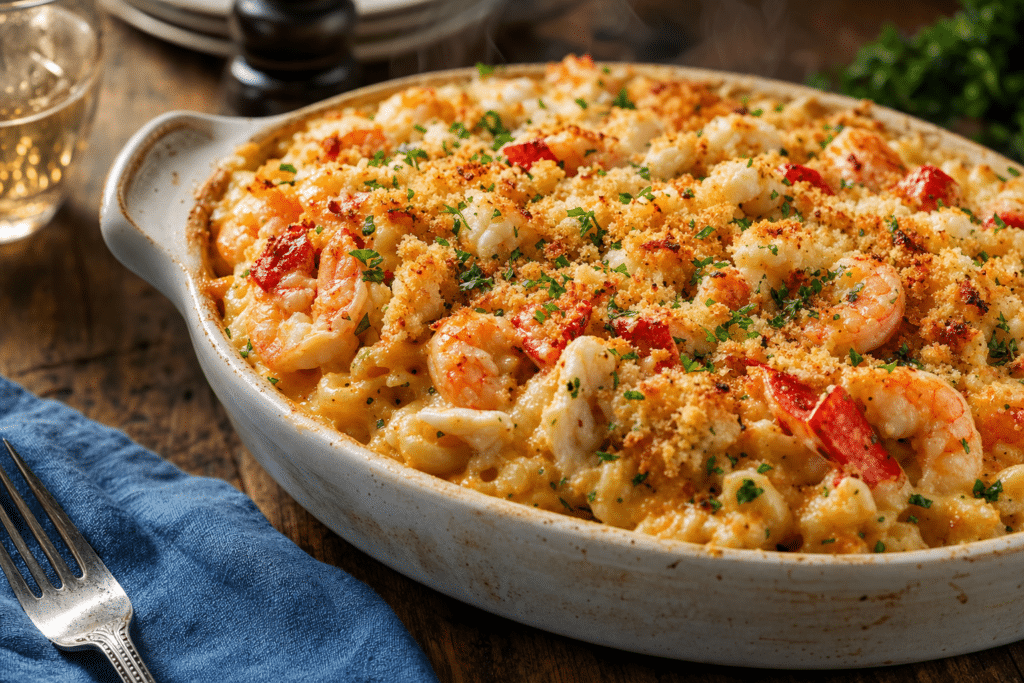
Best Seafood to Use for Seafood Mac and Cheese
One of the reasons Seafood Mac and Cheese is so popular is its versatility. Whether you’re planning a cozy family dinner or an elegant holiday meal, you can customize the recipe with your favorite seafood. While almost any seafood can work, some options pair especially well with a rich, creamy cheese sauce because of their texture and natural sweetness.
Shrimp
Shrimp is one of the most common choices for Shrimp Mac and Cheese, and for good reason. It cooks quickly, has a mild, slightly sweet flavor, and holds its shape well after baking. Medium or large shrimp are ideal because they provide a satisfying bite without overpowering the pasta.
For the best results, peel and devein the shrimp before cooking, then chop larger pieces if you want a more even distribution throughout the casserole. Avoid overcooking the shrimp before baking, as it will continue to warm through in the oven.
Lobster
If you’re looking to create a restaurant quality dish, lobster is hard to beat. Its buttery, delicate flavor transforms ordinary mac and cheese into an unforgettable meal that’s perfect for birthdays, anniversaries, or holiday celebrations.
Fresh lobster is always a great option, but frozen lobster meat works well too when thawed properly. Fold the cooked lobster gently into the cheese sauce to keep the chunks intact and preserve their tender texture.
Crab
Crab brings a subtle sweetness that complements creamy cheeses beautifully. Lump crab meat is often the preferred choice because it offers generous pieces with minimal shell fragments. It blends effortlessly into the sauce while still providing distinct bites of seafood in every serving.
Since crab has a naturally delicate flavor, avoid using too many bold seasonings that might overshadow it. A light touch of garlic, black pepper, or Old Bay seasoning is usually all that’s needed.
Can You Mix Different Types of Seafood?
Absolutely. In fact, combining shrimp, lobster, and crab creates one of the richest versions of Seafood Mac and Cheese. Each seafood contributes its own unique texture and flavor, resulting in a dish that feels balanced rather than one dimensional.
If you’re preparing this recipe for a special gathering, consider using a mix like:
- Shrimp for sweetness and a firm texture.
- Lobster for richness and buttery flavor.
- Lump crab meat for delicate, flaky bites.
This combination delivers the classic surf-inspired flavor that makes baked seafood macaroni and cheese feel truly indulgent.
Should You Use Fresh or Frozen Seafood?
Both fresh and frozen seafood can produce excellent results. Fresh seafood offers outstanding flavor when it’s readily available, while high quality frozen seafood is a convenient alternative that often retains its freshness because it’s frozen shortly after being harvested.
If using frozen seafood, thaw it overnight in the refrigerator and pat it dry with paper towels before adding it to the cheese sauce. Removing excess moisture helps maintain the creamy consistency of the casserole and prevents the sauce from becoming watery.
Delicious Variations of Seafood Mac and Cheese
One of the best things about Seafood Mac and Cheese is how easily you can customize it to suit different tastes and occasions. A few simple ingredient swaps or seasoning changes can give this creamy classic an entirely new personality without changing the heart of the recipe. Whether you enjoy bold spices, Southern comfort food, or a luxurious surf and turf dinner, there’s a variation that’s sure to become a favorite.
Cajun Seafood Mac and Cheese
If you enjoy a little heat, a Cajun inspired version is a fantastic choice. Stir one to two teaspoons of Cajun seasoning into the cheese sauce, then add sautéed shrimp, crab, or crawfish for extra depth of flavor. A diced bell pepper and a touch of smoked paprika also complement the creamy sauce beautifully.
For even more authentic Southern flavor, finish the casserole with chopped green onions and a light sprinkle of parsley before serving. The subtle spice balances the richness of the cheese without overwhelming the seafood.
Old Bay Seafood Mac and Cheese
Old Bay seasoning and seafood are a classic pairing. Adding a teaspoon of Old Bay to the cheese sauce enhances the natural sweetness of shrimp, crab, or lobster while bringing a savory blend of herbs and spices to the dish.
For extra texture, sprinkle a little Old Bay over the buttered panko breadcrumbs before baking. The result is a golden, flavorful crust that adds just the right amount of seasoning to every bite without overpowering the creamy cheese sauce.
Southern Style Seafood Mac and Cheese
If you’re inspired by a traditional Baked Mac and Cheese Recipe Southern style, make the casserole even richer by adding a blend of sharp cheddar, Gruyère, and a little Monterey Jack. Bake it until the top develops a beautifully crisp, golden crust while the center stays irresistibly creamy.
This version pairs especially well with holiday meals and family gatherings, offering the comforting flavors many people associate with classic Southern cooking.
Surf and Turf Mac and Cheese
Looking for an impressive main course? Turn your Seafood Mac and Cheese into a memorable surf and turf meal by serving it alongside grilled steak, filet mignon, or prime rib. The creamy pasta complements the rich flavor of beef, creating a restaurant worthy dinner that’s perfect for birthdays, anniversaries, or holiday celebrations.
You can even add small pieces of steak directly into the casserole for a hearty twist that combines land and sea in every forkful.
Make It Your Own
One of the joys of homemade cooking is adapting recipes to match your family’s preferences. Try mixing different cheeses, experimenting with seafood combinations, or adding ingredients like sautéed mushrooms, spinach, roasted garlic, or crispy bacon for extra flavor and texture.
No matter which variation you choose, the foundation remains the same: a smooth homemade cheese sauce, perfectly cooked pasta, and high quality seafood. Once you’ve mastered the basic recipe, creating your own signature version of Seafood Mac and Cheese becomes part of the fun.
Which Variation Is the Most Popular?
Classic Seafood Mac and Cheese made with shrimp, lobster, and a blend of Gruyère and sharp cheddar remains the most popular version. However, Cajun and Old Bay variations have become favorites for home cooks who want to add a little extra character while keeping the dish creamy, comforting, and full of seafood flavor.
What to Serve with Seafood Mac and Cheese
Although Seafood Mac and Cheese is rich enough to be enjoyed on its own, pairing it with the right side dishes can turn it into a balanced and memorable meal. Since the creamy cheese sauce and seafood create a hearty main course, lighter accompaniments help refresh the palate while adding color and variety to your table. Whether you’re planning a casual family dinner or a festive Seafood Thanksgiving feast, these side dishes complement every bite without competing with the flavors of the casserole.
Fresh Salads for a Balanced Meal
A crisp salad is one of the easiest ways to balance the richness of baked Seafood Mac and Cheese. Fresh greens add brightness and a refreshing contrast to the creamy pasta.
Some excellent choices include:
- Mixed greens with a lemon vinaigrette.
- Caesar salad with homemade croutons.
- Arugula salad with cherry tomatoes and shaved Parmesan.
- Spinach salad with sliced cucumbers and a light citrus dressing.
The acidity from the dressing helps cut through the richness of the cheese, making every bite feel fresh and satisfying.
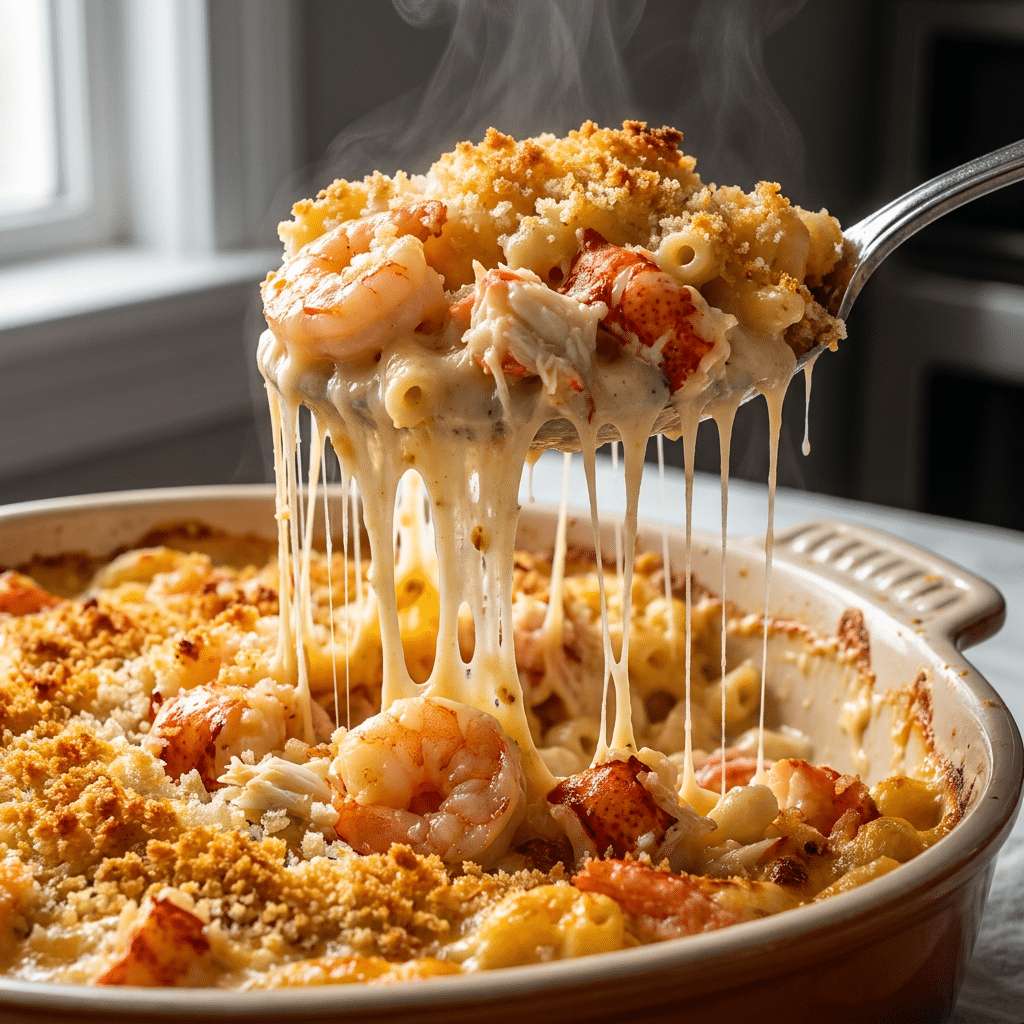
Vegetable Side Dishes
Roasted or steamed vegetables pair beautifully with seafood because they add texture and natural sweetness without making the meal feel heavy.
Popular vegetable sides include:
- Roasted asparagus with garlic.
- Green beans almondine.
- Roasted broccoli.
- Honey glazed carrots.
- Garlic roasted Brussels sprouts.
- Oven roasted tomatoes.
These vegetables are simple to prepare and bring vibrant color to the plate while complementing the creamy flavors of the casserole.
Bread That Completes the Meal
Warm bread is always welcome alongside Seafood Mac and Cheese, especially if you want to soak up every bit of the rich cheese sauce.
Some favorites include:
- Garlic bread.
- Buttery dinner rolls.
- Crusty French bread.
- Homemade biscuits.
- Herb focaccia.
Serve the bread warm for the best texture and flavor.
Perfect Pairings for Holidays and Special Occasions
Because Seafood Mac and Cheese feels both comforting and elegant, it’s an excellent choice for holiday celebrations. It fits naturally into a Seafood Thanksgiving menu, Christmas dinner, New Year’s gatherings, or even a special anniversary meal.
For larger celebrations, consider serving it alongside:
- Prime rib.
- Grilled steak for a classic surf and turf dinner.
- Roast turkey during the holidays.
- Baked salmon.
- Grilled vegetables.
- Fresh cranberry salad for seasonal freshness.
These combinations create an impressive spread while allowing the creamy casserole to remain one of the meal’s standout dishes.
What Is the Best Side Dish for Seafood Mac and Cheese?
The best side dish is a fresh green salad with a light vinaigrette. Its crisp texture and bright flavor balance the richness of Seafood Mac and Cheese, creating a well rounded meal. If you’re serving the casserole for a holiday or special occasion, roasted asparagus, green beans almondine, or garlic bread are also excellent choices that complement the seafood without overpowering it.
Storage, Freezing, and Reheating
One of the many reasons Seafood Mac and Cheese is a favorite for busy families and holiday hosts is that it stores surprisingly well. Whether you have leftovers from a family dinner or you’re preparing the dish ahead for a special occasion, proper storage helps preserve its creamy texture and rich seafood flavor. With a few simple steps, you can enjoy this comforting casserole days later without sacrificing quality.
How to Store Leftovers
Allow the Seafood Mac and Cheese to cool for about 20 to 30 minutes before transferring it to an airtight container. Storing it while it’s still piping hot can create excess condensation, which may affect the texture of the cheese sauce.
Place the container in the refrigerator, where it will stay fresh for up to 3 to 4 days. If you’re storing a large baking dish, cover it tightly with plastic wrap or aluminum foil before refrigerating.
Can You Freeze Seafood Mac and Cheese?
Yes, Seafood Mac and Cheese freezes well, making it a convenient make ahead meal. While dairy based sauces can sometimes separate slightly after freezing, proper handling helps maintain a creamy consistency.
For the best results:
- Let the casserole cool completely.
- Divide it into individual portions or freeze the entire baking dish.
- Wrap it tightly with plastic wrap followed by aluminum foil, or store it in freezer safe containers.
- Label and date each container.
For the best flavor and texture, enjoy frozen Seafood Mac and Cheese within 2 months.
The Best Way to Reheat
The oven is the preferred method for reheating because it warms the casserole evenly while helping the breadcrumb topping stay crisp.
Follow these simple steps:
- Preheat the oven to 300°F (150°C).
- Place the casserole in an oven safe dish if needed.
- Add a splash of milk or heavy cream to help restore moisture.
- Cover loosely with foil.
- Bake for 20 to 30 minutes, or until heated through.
- Remove the foil during the last few minutes if you’d like the topping to become crisp again.
If you’re reheating a single serving, the microwave works well too. Heat in short 30 second intervals, stirring gently between each interval to ensure even warming. Adding a small splash of milk before reheating helps keep the cheese sauce smooth and creamy.
Can You Make Seafood Mac and Cheese Ahead of Time?
Absolutely. This recipe is ideal for entertaining because you can assemble everything up to 24 hours in advance. Prepare the pasta, cheese sauce, and seafood as directed, then transfer the mixture to your baking dish and cover it tightly before refrigerating.
When you’re ready to serve, sprinkle the buttered breadcrumbs over the top and bake as directed. If the casserole is coming straight from the refrigerator, simply allow for an additional 10 to 15 minutes of baking time to ensure it’s heated all the way through.
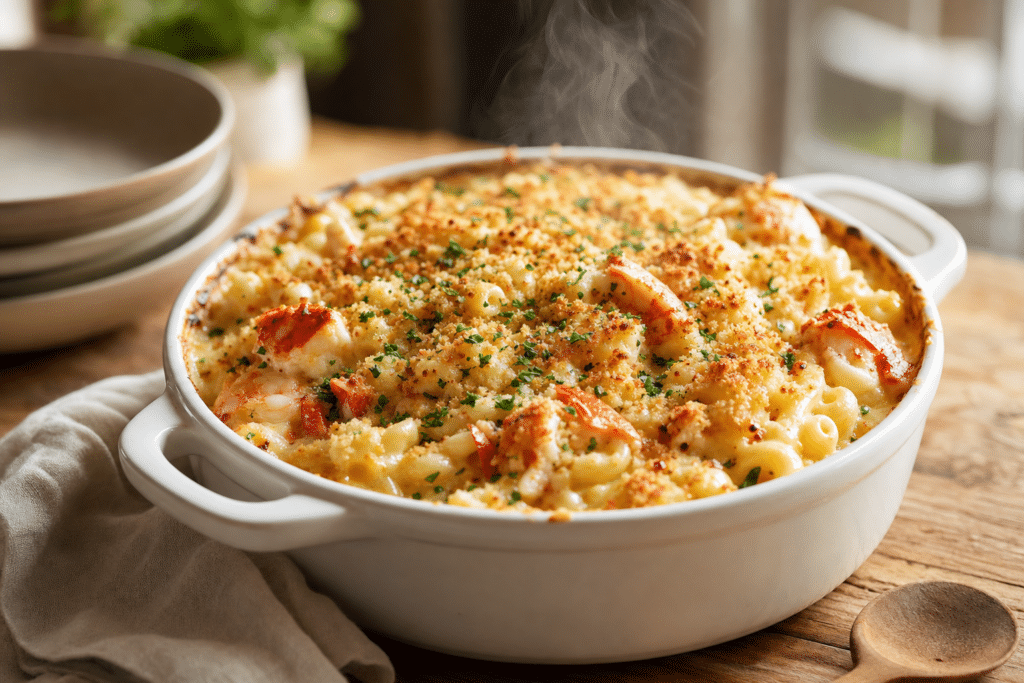
Preparing Seafood Mac and Cheese ahead of time not only saves valuable time on busy days but also makes holiday meals, family gatherings, and dinner parties much less stressful without compromising flavor or texture.
Conclusion
Whether you’re preparing a cozy family dinner or planning an impressive holiday menu, Seafood Mac and Cheese is a recipe that never disappoints.
Its combination of tender shrimp, sweet crab, or buttery lobster with a rich, creamy cheese sauce creates a comforting dish that’s both elegant and satisfying. The best part is how easy it is to customize.
From adding Cajun seasoning for a spicy twist to creating a luxurious surf and turf version, there are countless ways to make this recipe your own. With the expert tips, storage advice, and simple techniques shared throughout this guide, you’ll be able to achieve consistently creamy, flavorful results every time you bake it.
Gather your favorite seafood, choose a blend of quality cheeses, and enjoy a homemade Seafood Mac and Cheese that’s worthy of any special occasion. Once you serve it, don’t be surprised if family and friends ask for the recipe and request it again and again.
Frequently Asked Questions About Seafood Mac and Cheese
1.Can I use frozen seafood for Seafood Mac and Cheese?
Yes. High quality frozen seafood works very well in Seafood Mac and Cheese. Simply thaw it overnight in the refrigerator and pat it dry before adding it to the cheese sauce. Removing excess moisture helps keep the sauce rich and creamy while preventing the casserole from becoming watery.
2.What is the best cheese for Seafood Mac and Cheese?
A combination of Gruyère and sharp cheddar offers the best balance of flavor and meltability. Gruyère creates a smooth, buttery sauce, while sharp cheddar adds the classic taste most people expect from homemade mac and cheese. For extra depth, you can also mix in a small amount of Parmesan or Fontina.
3.Should the seafood be cooked before baking?
Yes. Always use fully cooked seafood before mixing it into the pasta. Since the casserole finishes cooking in the oven, adding raw seafood can lead to uneven cooking and may result in a watery sauce. Pre cooked shrimp, lobster, and crab stay tender and blend beautifully with the creamy cheese sauce.
4.Why did my cheese sauce become grainy?
Grainy cheese sauce is usually caused by high heat or adding the cheese too quickly. For the smoothest results, lower the heat before stirring in the cheese and add it gradually, allowing each handful to melt completely before adding the next. Freshly grated cheese also melts much more evenly than pre shredded varieties.
5.What pasta works best besides elbow macaroni?
Although elbow macaroni is the traditional choice, other pasta shapes work just as well. Cavatappi, shells, rotini, and pipette are all excellent options because their ridges and curves hold onto the creamy cheese sauce, ensuring every bite is packed with flavor.