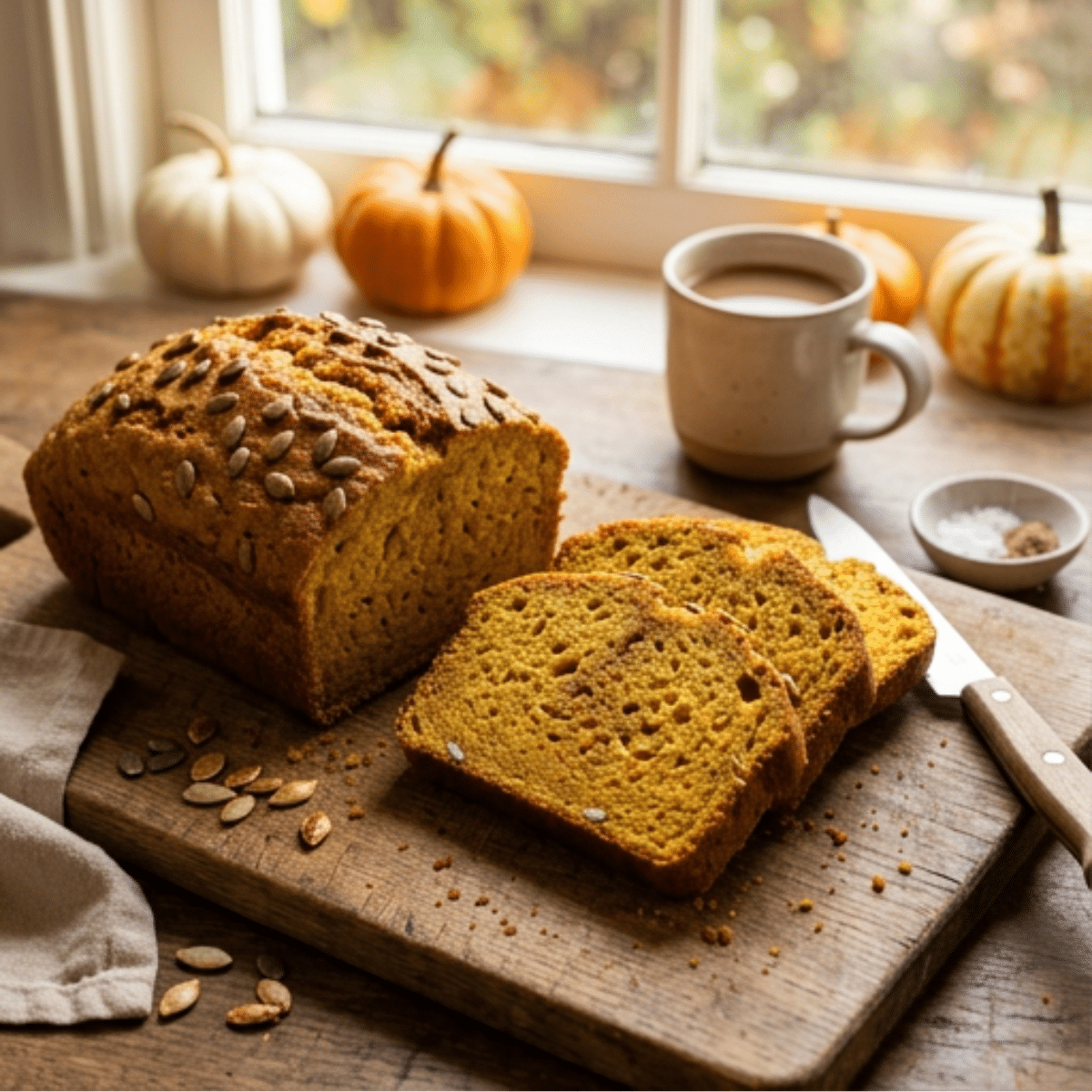
Pumpkin Bread Loaf always takes me back to those first cool fall mornings when turning on the oven suddenly feels like a good idea again. You know the kind, right? Coffee on the counter, cinnamon in the air, and a can of pumpkin puree waiting to become something warm.
I’ve baked plenty of pumpkin bread over the years, and I learned pretty quickly that a beautiful loaf can still disappoint. Too dry, too dense, sometimes oddly gummy in the center. I’ve had all three happen. What finally made the difference was keeping things simple and paying attention to moisture, mixing, and baking time.
This cinnamon pumpkin bread gives you that soft, tender crumb I’m always hoping for, with plenty of pumpkin flavor and cozy spice. It’s an easy fall sweet treat you can enjoy plain, add chocolate chips to, or finish with a simple pumpkin bread glaze. And yes, I’ll share the little tricks that actually matter.
Table of Contents
Why You’ll Love This Pumpkin Bread Loaf
There’s a reason I keep coming back to this Pumpkin Bread Loaf when the weather cools down. It doesn’t ask much from you. No mixer, no complicated technique, and no afternoon spent washing half the kitchen afterward. You mix the batter, pour it into the pan, and let the oven do most of the work. But simple doesn’t mean boring. The pumpkin gives the loaf a soft, moist crumb, while cinnamon and warm spices bring that familiar fall flavor you notice before you even take the first bite.
And can we talk about the smell for a second? Whenever I bake cinnamon pumpkin bread, someone inevitably wanders into the kitchen asking, “Is it ready yet?” That combination of pumpkin, brown sugar, and cinnamon has a way of making the whole house feel warmer. Maybe that’s why this is one of my favorite autumn baking ideas. It feels special without requiring a special occasion.
A Simple Fall Dessert That’s Easy to Customize
I usually make the loaf fairly simple, but you don’t have to. Chocolate chips make it sweeter, chopped pecans or walnuts add a little crunch, and a thin pumpkin bread glaze can turn an everyday loaf into something that feels much more like dessert.
A few reasons this recipe works so well:
- Soft, moist texture without being soggy
- Plenty of real pumpkin flavor
- Warm cinnamon and fall spices
- No mixer required
- Easy to customize with chocolate, nuts, or glaze
- Suitable for breakfast, snacking, or a fall sweet treat
- Even better once the flavors have had time to settle
Actually, that last point surprised me the first few times I made pumpkin bread. I expected the fresh-from-the-oven loaf to be the best part. Instead, once completely cooled and stored properly, the flavors seem to settle into each other and the crumb stays wonderfully tender.
Is Pumpkin Bread Loaf a Dessert or Breakfast?
Honestly, I think it comfortably belongs in both camps. Serve a plain slice beside coffee and it feels like breakfast. Add chocolate chips or a cinnamon-vanilla glaze, and the same Pumpkin Bread Loaf becomes an easy fall dessert.
That flexibility is part of its appeal. You can bake one loaf on Sunday and somehow find a perfectly reasonable excuse to eat it on Monday morning, Tuesday afternoon, and, well… probably Wednesday night too.
Ingredients for the Perfect Pumpkin Bread Loaf
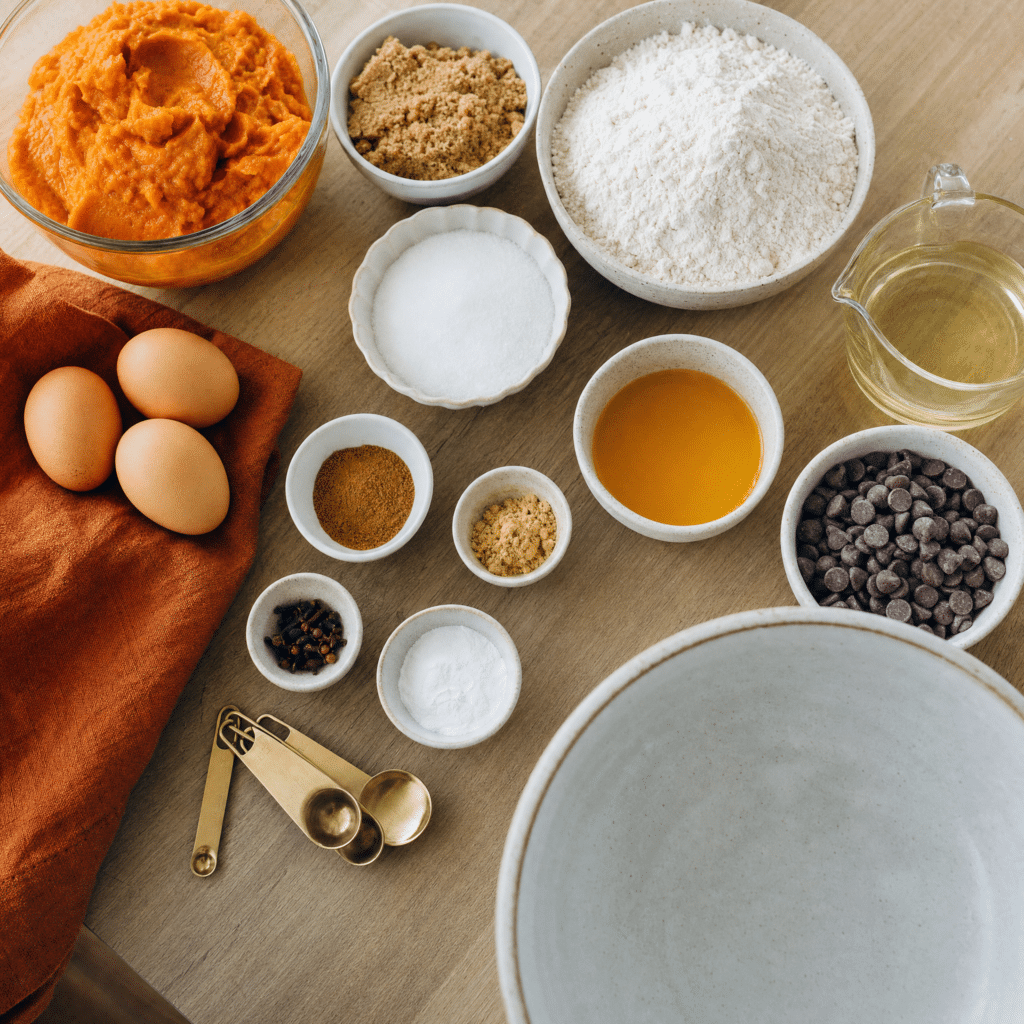
A good Pumpkin Bread Loaf doesn’t need a long list of unusual ingredients. What matters more, at least from what I’ve learned after baking a few disappointing loaves, is how those ingredients work together. Pumpkin already brings quite a bit of moisture to the batter, so the balance between flour, oil, eggs, and sugar matters more than you might expect.
For this loaf, you’ll need:
- All-purpose flour
- Baking soda
- Pumpkin puree
- Eggs
- Vegetable or canola oil
- Granulated sugar
- Brown sugar
- Ground cinnamon
- Ground ginger
- Ground nutmeg
- Ground cloves
- Salt
- A small amount of orange juice or milk
- Chocolate chips, if you want them
Nothing particularly surprising there. Still, two ingredients deserve a little more attention because they have a big influence on the final texture and flavor.
Why Pumpkin Puree Makes a Moist Pumpkin Loaf
Pumpkin puree isn’t here just so we can call this pumpkin bread. It contributes moisture, body, color, and that earthy sweetness underneath all the cinnamon and sugar. I prefer canned pumpkin puree because its consistency tends to be predictable. Homemade puree can work too, but if yours looks watery, removing some excess moisture first can help prevent a heavy or gummy pumpkin puree loaf.
Oil plays a similar role. You might be tempted to swap it for butter because, well, butter sounds better. I’ve thought the same thing. But for this kind of quick bread, oil helps maintain that soft texture even after the loaf has cooled. That matters if you’re planning to keep a few slices for tomorrow.
Cinnamon and Warm Spices for Better Pumpkin Flavor
Here’s the funny thing about pumpkin: on its own, its flavor is fairly gentle. Cinnamon, ginger, nutmeg, and cloves are what give a cinnamon pumpkin loaf that unmistakable autumn personality.
Cinnamon should lead rather than completely dominate. Ginger adds warmth, nutmeg gives a deeper aromatic note, and cloves need a lighter hand because they can take over quickly. Together, they make the pumpkin taste richer without hiding it.
How to Make Pumpkin Bread With Cinnamon
Learning how to make pumpkin bread with cinnamon is mostly about not overcomplicating things. I used to think the batter needed plenty of mixing to become smooth. Turns out, that was doing me no favors. Pumpkin bread is a quick bread, and once the wet and dry ingredients meet, a gentler hand usually gives you a softer crumb.
Start by preheating your oven to 350°F (177°C) and greasing a 9×5-inch loaf pan. In one bowl, whisk together the flour, baking soda, cinnamon, ginger, nutmeg, cloves, and salt. In another, combine the eggs with granulated and brown sugar, then whisk in the pumpkin puree, oil, and orange juice or milk.
Mixing Your Pumpkin Bread Loaf Batter
Pour the wet mixture into the dry ingredients and gently fold everything together. Stop once you no longer see obvious streaks of dry flour. A few small lumps? Completely fine. Resist that little voice telling you the batter needs to look perfectly smooth.
If you’re adding chocolate chips or chopped nuts, fold them in at the end. Then transfer the batter to your prepared pan and spread the top lightly so it bakes evenly.
The biggest mistake here is overmixing. Too much stirring can encourage excess gluten development, which may leave your Pumpkin Bread Loaf heavier and tougher than the tender cinnamon loaf you were hoping for.
How to Bake a Moist Cinnamon Pumpkin Loaf
Bake the loaf for about 60 to 65 minutes. I recommend checking it around the 55-minute mark because ovens have personalities of their own. Mine certainly does. Insert a toothpick into the center. You want it to come out clean or with a few moist crumbs, not coated in wet pumpkin batter.
If the top is browning faster than the middle is baking, loosely cover it with aluminum foil and continue baking. This gives the center more time without turning the crust too dark.
How Do You Know When Pumpkin Bread Is Fully Baked?
Check the center, not just the edges. A properly baked cinnamon pumpkin bread should feel set on top, and a toothpick inserted into its thickest part should show only a few moist crumbs.
Then comes the difficult part: waiting. Let the loaf cool before slicing it. Cut too soon and the warm interior can seem wetter and more fragile than it really is. Give it time to settle, and that first proper slice will be worth the wait.
Pumpkin Bread Glaze for a Sweeter Fall Treat
A Pumpkin Bread Loaf is already good enough to eat plain, especially when cinnamon and warm spices are doing their job. Still, sometimes I want it to feel a little more like dessert. That’s when I add a simple pumpkin bread glaze. It takes only a few minutes, but somehow that thin drizzle makes the loaf look like something you planned for guests rather than something you baked because there was an open can of pumpkin in the fridge.
I prefer keeping the glaze light. Pumpkin bread is naturally sweet, so burying it beneath a thick layer of icing can hide the cinnamon and pumpkin flavors we worked to build. A thin glaze gives you sweetness in the first bite, then lets the spiced loaf come through.
Easy Cinnamon Vanilla Pumpkin Bread Glaze
For a simple cinnamon vanilla glaze, combine:
- 1 cup powdered sugar
- 1 to 2 tablespoons milk
- 1/2 teaspoon vanilla extract
- A small pinch of ground cinnamon
Start with one tablespoon of milk and whisk everything together. If the glaze seems too thick to drizzle, add more milk a teaspoon at a time. Go slowly here. I’ve added too much liquid in one enthusiastic pour before, and suddenly my glaze was closer to sweetened milk.
You’re looking for a consistency that falls slowly from a spoon and settles over the top of the cinnamon pumpkin bread without immediately running off the sides.
There’s another option, too. If you prefer stronger cinnamon flavor, sprinkle a tiny amount over the fresh glaze. If you want the pumpkin itself to remain the star, leave the extra cinnamon out. Both work.
When Should You Glaze Pumpkin Bread?
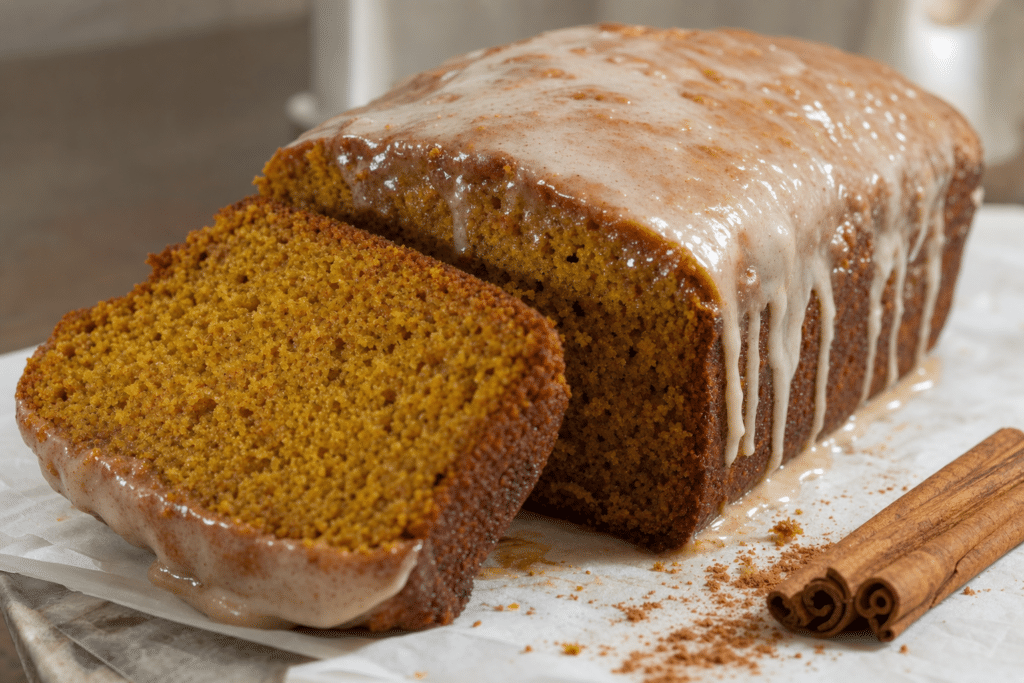
Wait until your Pumpkin Bread Loaf has cooled completely before adding the glaze. This part is tempting to rush, but warm bread melts the icing and sends it sliding down the loaf before it has a chance to set.
Once cooled, drizzle the glaze across the top and let it sit briefly before slicing. The result lands somewhere between cozy breakfast bread and a proper fall sweet treat, which, admittedly, is exactly where I like pumpkin bread to be.
And if glaze isn’t your thing? Skip it. The loaf doesn’t need rescuing. Think of the cinnamon vanilla glaze as the extra sweater you grab on a crisp autumn evening: not always necessary, but pretty nice when you want it.
Tips for a Moist Pumpkin Bread Loaf
Getting a Pumpkin Bread Loaf into the oven is easy. Getting one that comes out soft, moist, and evenly baked is where the small details start to matter. I learned this mostly through the annoying way: loaves that looked perfect around the edges while the center was still underbaked, and others I left in five minutes too long because I was worried about exactly that problem.
The good news? You don’t need a complicated baking technique. Most texture problems come back to a handful of things: measuring the flour, controlling the moisture in your pumpkin puree, mixing gently, and knowing when to pull the loaf from the oven.
How to Keep Cinnamon Pumpkin Bread Moist
First, measure your flour carefully. Scooping flour directly from the container can pack more into the cup than you realize. Too much flour changes the balance of the batter and can leave your cinnamon pumpkin bread dry instead of tender.
Then pay attention to these details:
- Use thick pumpkin puree rather than a watery pumpkin mixture.
- Mix only until the wet and dry ingredients come together.
- Keep the oil in the recipe if moisture is your priority.
- Start checking the loaf before the suggested baking time ends.
- Cover the top loosely with foil if it browns too quickly.
- Let the loaf cool before cutting into it.
- Store leftovers covered so the exposed crumb doesn’t dry out.
There’s a strange temptation with quick breads to keep baking until the toothpick is absolutely spotless. I used to do that. Now I’d rather see a few soft crumbs attached to it than continue baking a loaf that is already done.
Why Is My Pumpkin Bread Gummy in the Middle?
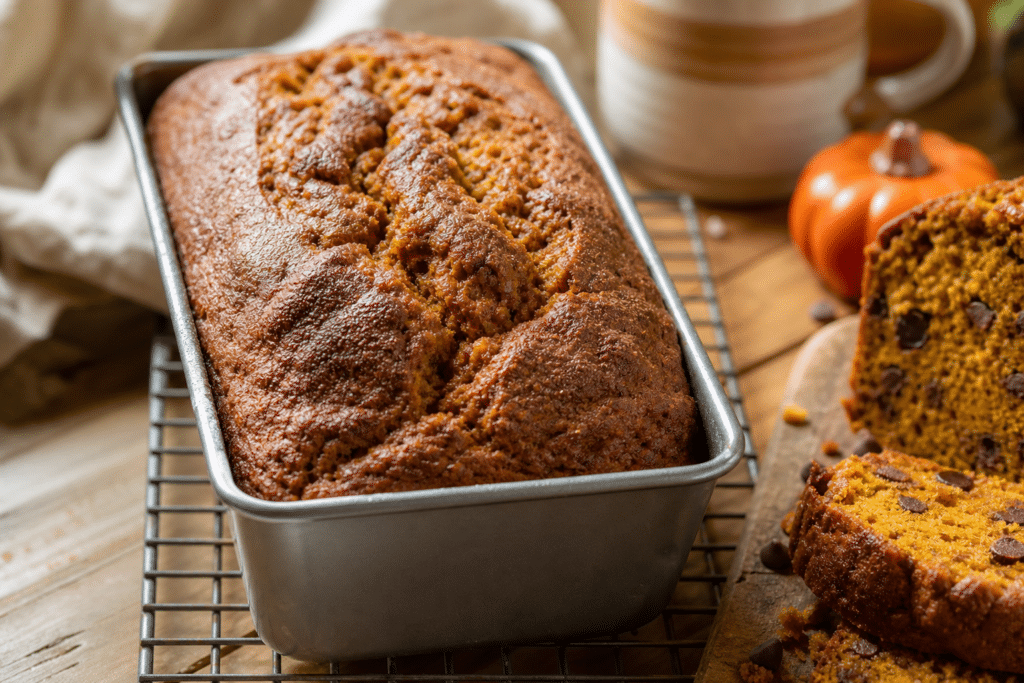
A gummy Pumpkin Bread Loaf can result from excess moisture, underbaking, inaccurate ingredient measurements, or slicing before the interior has had enough time to cool and set.
This is especially worth watching when using homemade pumpkin puree. Its water content can vary more than canned puree. If yours looks loose or watery, removing some of that excess liquid before adding it to the batter can make the final crumb more predictable.
And don’t judge doneness by the browned top alone. Pumpkin and brown sugar give the loaf beautiful color while the center may still need more time. Test the deepest part of the loaf instead.
One last thing: give your bread some patience after baking. I know, nobody wants to stare at a warm cinnamon pumpkin loaf sitting on a cooling rack. But allowing the crumb to settle makes cleaner slices and, more importantly, gives you the soft texture you were trying to achieve in the first place.
Pumpkin Bread Loaf Variations and Substitutions
Once you’ve made the basic Pumpkin Bread Loaf a couple of times, it’s hard not to start experimenting. At least, that’s what happened in my kitchen. One loaf gets chocolate chips, the next gets pecans, and suddenly I’m standing over the mixing bowl wondering whether a little extra vanilla would be a good idea. Usually, it is.
The trick is knowing which changes are harmless and which ones can affect the texture. Add-ins such as chocolate chips and nuts are fairly forgiving. Changing the pumpkin, fat, or liquid deserves more attention because those ingredients help determine how moist and tender the loaf becomes.
Easy Cinnamon Pumpkin Bread Variations
You can take the same cinnamon pumpkin bread base in several directions depending on what you have in the pantry and how sweet you want the finished loaf.
- Fold in semi-sweet or dark chocolate chips for a richer fall sweet treat.
- Add chopped pecans or walnuts for crunch.
- Stir in a little vanilla extract for a softer pumpkin vanilla bread flavor.
- Add dried cranberries for a tart contrast to the brown sugar and pumpkin.
- Sprinkle cinnamon sugar over the batter before baking for a lightly crisp top.
- Leave out all the extras when you want the pumpkin and spices to stand on their own.
- Finish the cooled loaf with the cinnamon vanilla pumpkin bread glaze from the previous section.
I tend to change only one or two things at a time. Throwing chocolate, nuts, glaze, extra spices, and a sugary topping onto the same loaf sounds exciting… until you can barely taste the pumpkin anymore.
Can I Make Pumpkin Loaf With Vanilla Pudding?
You can find pumpkin loaf with vanilla pudding recipes that use instant pudding mix for additional sweetness and a softer texture. However, I wouldn’t simply add a packet to this recipe without adjusting other ingredients.
Pudding mix contains starch, sugar, flavoring, and other ingredients that can change how a quick bread behaves in the oven. If what you really want is a gentle vanilla note, vanilla extract is the simpler option for this particular Pumpkin Bread Loaf.
And this is one substitution where I’d rather be cautious than pretend everything is interchangeable. Baking can be flexible, but it’s still chemistry.
Can I Substitute Homemade Pumpkin Puree?
Yes, homemade pumpkin puree can work in a pumpkin puree loaf, but check its consistency first. If it seems noticeably wetter than canned puree, remove some excess moisture before measuring it for the batter.
For other substitutions, keep the same principle in mind: protect the moisture balance. Milk can replace orange juice, different chocolate varieties can replace semi-sweet chips, and nuts can be added or omitted without reinventing the recipe.
That flexibility is what makes pumpkin bread such a useful autumn recipe. Make it plain for breakfast, dress it up for dessert, or tweak the add-ins based on whatever is already sitting in your cupboard. After a while, you may end up with your own version that you make every fall without even thinking about it.
How to Store and Freeze Pumpkin Bread Loaf
A freshly baked Pumpkin Bread Loaf rarely lasts very long in my kitchen, but when it does, storing it properly makes a noticeable difference. Pumpkin bread naturally holds moisture well, which is great for keeping the crumb soft. The downside is that leaving it uncovered can dry the cut edges surprisingly fast. And putting it away while it’s still warm? I’ve made that mistake too. Trapped steam can leave the surface sticky and overly damp.
Let the loaf cool completely before wrapping or storing it. Once cooled, keep it in an airtight container or wrap it securely. At room temperature, the pumpkin bread should stay enjoyable for about 3 to 4 days. If you need it to last longer, refrigerating or freezing is the better option.
Pumpkin Bread Loaf: The Ultimate Moist Fall Recipe

Ingredients
- 1 3/4 cups 219 g all-purpose flour
- 1 teaspoon baking soda
- 2 teaspoons ground cinnamon
- 1/4 teaspoon ground nutmeg
- 1/4 teaspoon ground cloves
- 1/4 teaspoon ground ginger
- 3/4 teaspoon salt
- 2 large eggs at room temperature
- 1/2 cup 100 g granulated sugar
- 3/4 cup 150 g packed brown sugar
- 1 1/2 cups 340 g pumpkin puree
- 1/2 cup 120 ml vegetable or canola oil
- 1/4 cup 60 ml orange juice or milk
- 2/3 cup 120 g semi-sweet chocolate chips, optional
- Optional Cinnamon Vanilla Glaze
- 1 cup powdered sugar
- 1 to 2 tablespoons milk
- 1/2 teaspoon vanilla extract
- Small pinch of ground cinnamon
Instructions
- Preheat the oven to 350°F (177°C). Grease a 9×5-inch loaf pan and set it aside.
- In a large bowl, whisk together the flour, baking soda, cinnamon, nutmeg, cloves, ginger, and salt.
- In another bowl, whisk the eggs, granulated sugar, and brown sugar until combined. Add the pumpkin puree, oil, and orange juice or milk. Whisk until smooth.
- Pour the wet ingredients into the dry ingredients. Gently stir with a spatula or wooden spoon just until combined. A few small lumps are fine. Avoid overmixing.
- Fold in the chocolate chips if using.
- Transfer the batter to the prepared loaf pan and spread it evenly.
- Bake for approximately 60 to 65 minutes. Begin checking around 55 minutes. If the top becomes too brown before the center is finished, loosely cover it with aluminum foil.
- Insert a toothpick into the center. The Pumpkin Bread Loaf is ready when it comes out clean or with a few moist crumbs and no wet batter.
- Let the loaf cool completely before removing it from the pan and slicing.
- For the optional glaze, whisk powdered sugar, milk, vanilla, and cinnamon until smooth. Drizzle over the completely cooled loaf and allow the glaze to set before serving.
Notes
- Canned pumpkin puree provides the most predictable consistency.
- If using homemade pumpkin puree, remove excess moisture if it appears watery.
- Do not overmix the batter. Stir only until the ingredients come together.
- Chocolate chips are optional and can be replaced with chopped pecans or walnuts.
- Milk can replace orange juice.
- Pumpkin pie spice can replace the nutmeg, ginger, and cloves. Keep the cinnamon for a stronger cinnamon pumpkin bread flavor.
- Let the loaf cool completely before glazing or slicing.
- Nutrition information is an estimate and will vary according to ingredients, brands, serving size, and optional additions.
How to Keep Pumpkin Bread Fresh
For everyday storage, I prefer keeping the cinnamon pumpkin bread unsliced until I actually need it. Every cut exposes more of the crumb to air, so leaving the loaf whole can help it stay soft.
A few simple habits make storage easier:
- Cool the loaf completely before covering it.
- Store it tightly wrapped or in an airtight container.
- Keep it at room temperature for up to 3 to 4 days.
- Refrigerate it for up to about one week.
- Place parchment between slices if you plan to freeze them individually.
- If you added pumpkin bread glaze, let the glaze set before wrapping the loaf.
Here’s something I didn’t expect when I first started baking pumpkin bread: I sometimes prefer it the next day. The cinnamon, pumpkin, brown sugar, and warm spices seem to settle together overnight. The flavor feels a little deeper, and the crumb can remain wonderfully tender when properly covered.
Can You Freeze Pumpkin Bread Loaf?
Yes. Pumpkin Bread Loaf freezes well and can be kept frozen for up to about 3 months. You can freeze the entire loaf or individual slices depending on how you plan to serve it later.
For a whole loaf, allow it to cool completely and wrap it securely before freezing. When you’re ready to eat it, thaw it overnight in the refrigerator and then let it come closer to room temperature before serving.
Individual slices are even more convenient. I like this method because you don’t have to thaw an entire pumpkin puree loaf just because you suddenly want one piece with coffee.
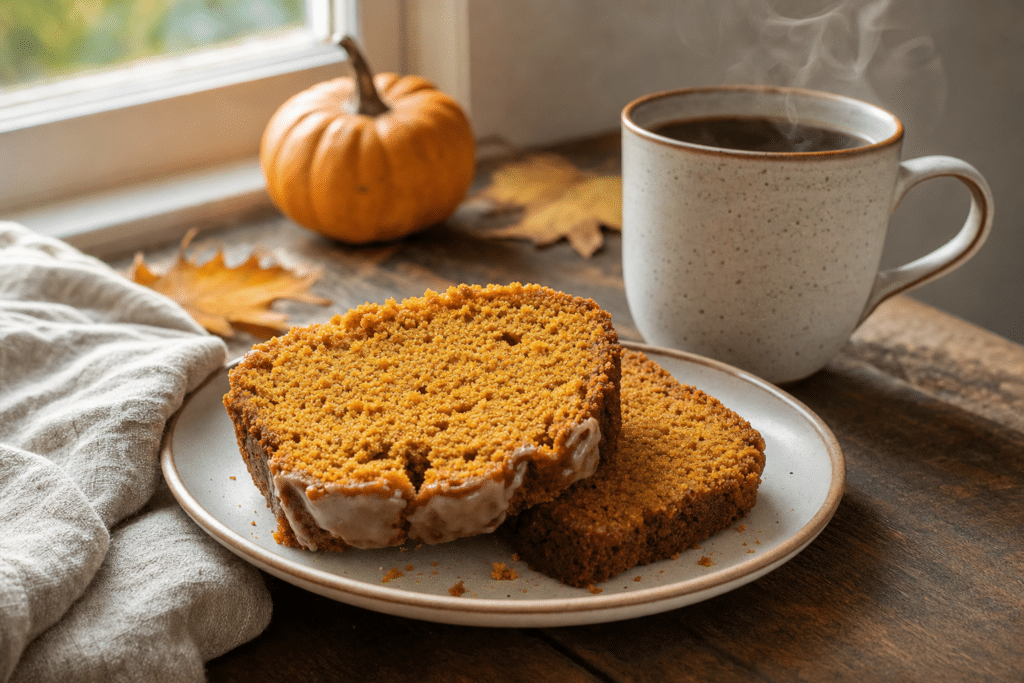
If you plan to use a glaze, I generally prefer freezing the bread without it and adding fresh glaze after thawing. It keeps things neater and gives the finished loaf that just-made appearance again.
That’s also why this recipe works nicely as a make-ahead fall sweet treat. Bake it when you have time, freeze it properly, and future-you gets homemade cinnamon pumpkin bread without starting again from flour and pumpkin puree.
Final Thoughts on This Pumpkin Bread Loaf
There’s something genuinely comforting about pulling pumpkin bread from the oven and letting that cinnamon-spiced smell take over the kitchen. After all the mixing, waiting, and resisting the urge to slice it too early, that first soft piece feels worth it.
What I like most about this recipe is how easily it fits into everyday fall baking. Keep it simple for breakfast, fold in chocolate chips for an afternoon treat, add nuts for some crunch, or drizzle the cooled loaf with cinnamon vanilla glaze when dessert sounds better. There really isn’t one “right” way to enjoy it.
Pumpkin Bread Loaf FAQs
Even a straightforward Pumpkin Bread Loaf can raise questions once you’re standing in the kitchen with an open can of pumpkin and a mixing bowl. Can homemade puree replace canned? Why did the middle turn gummy? Should the loaf go in the refrigerator? These are small details, but they can make the difference between a loaf you merely finish and one you immediately want to bake again.
1.Can I Use Fresh Pumpkin Puree for Pumpkin Bread Loaf?
Yes, you can use homemade pumpkin puree. The one thing I’d check first is its consistency. Fresh puree can contain more water than canned pumpkin, and that extra moisture may make your pumpkin puree loaf heavier or wetter.
If the puree looks loose, blot or strain away some moisture before measuring it. You want thick puree rather than something watery enough to pour.
2.Can I Make Cinnamon Pumpkin Bread Without Chocolate Chips?
Absolutely. Chocolate chips are an optional addition, not something the structure of the loaf depends on. Leaving them out gives you a more traditional cinnamon pumpkin bread, with the pumpkin and warm spices taking center stage.
You can also replace the chocolate with chopped pecans or walnuts if you want some texture without additional sweetness.
3.Should Pumpkin Bread Be Refrigerated?
Not necessarily. Properly covered pumpkin bread can be kept at room temperature for about 3 to 4 days. For longer storage, refrigerate it for up to about a week or freeze it.
And yes, if you’re wondering whether you can warm a slice the next morning, you certainly can. A slightly warm piece of pumpkin bread beside coffee is probably one of the better arguments for making the loaf in the first place.
4.What Is the Best Pan Size for Pumpkin Bread Loaf?
A 9×5-inch loaf pan works well for this Pumpkin Bread Loaf. Pan size matters more than it seems because changing the depth of the batter changes how quickly the center bakes.
If you use a different size, don’t blindly follow the same baking time. Start checking for doneness earlier and use the center of the loaf as your guide.