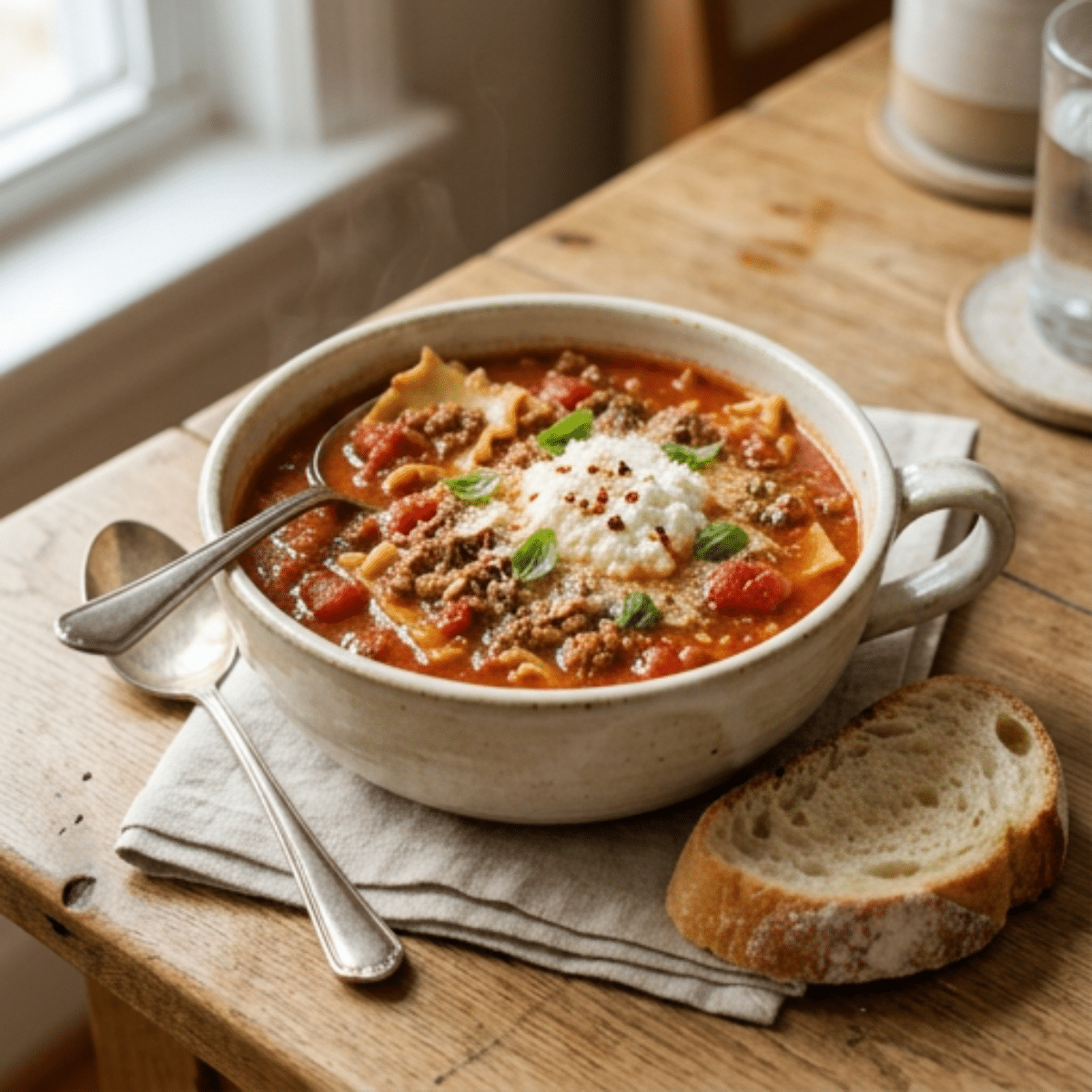
Lasagna Soup Recipe nights usually start the same way in my kitchen: I’m craving lasagna, but the thought of layering noodles, sauce, meat, and cheese feels like more work than I signed up for. You know that feeling, right? You want something warm and comforting, but you also want dinner on the table without turning the kitchen upside down.
That’s exactly why I keep coming back to this one pot lasagna soup. The first time I made it, I honestly wondered whether a soup could deliver that familiar lasagna comfort. Then I tasted the rich tomato broth with tender pasta, seasoned ground beef, Parmesan, and creamy ricotta. Yep, that did it.
Better still, this easy lasagna soup comes together in about 40 minutes and provides 28 grams of protein per serving. It’s cozy enough for a chilly fall evening, practical enough for a busy weeknight, and surprisingly simple to make.
Table of Contents
Why You’ll Love This One Pot Lasagna Soup Recipe
There’s a reason this Lasagna Soup Recipe works so well on those nights when cooking feels like one task too many. You get the familiar combination of beef, tomatoes, pasta, herbs, and cheese, but you don’t have to boil lasagna sheets, build layers, or wait for a casserole to bake. Everything comes together in one pot. For me, that’s the difference between thinking, “Lasagna sounds good tonight,” and actually making it.
And cleanup? Much easier. That alone puts this recipe high on my list of one pot meals for busy evenings.
An Easy Soup Recipe That Still Feels Like Dinner
Some soups leave me looking for something else to eat an hour later. This one doesn’t. Ground beef and pasta give it substance, while the tomato-based broth, Parmesan, and ricotta bring in those comforting lasagna flavors. Based on the original recipe’s nutrition information, each serving provides about 28 grams of protein, making it a useful option when you’re looking for a satisfying high protein dinner.
What I especially like is that the ingredient list isn’t complicated. Most of it is familiar territory:
- Ground beef
- Crushed tomatoes
- Beef broth
- Pasta or broken lasagna noodles
- Onion and garlic
- Italian-style dried herbs
- Parmesan and ricotta for serving
Nothing particularly fancy. Yet once everything has simmered together, it tastes far more comforting than that simple list suggests.
Perfect for Busy Nights and Cooler Weather
If you collect easy fall soup recipes, this is the kind worth keeping nearby. It takes about 10 minutes to prep and roughly 40 minutes from start to finish, according to the original recipe. That makes it realistic for a weeknight rather than one of those “easy” recipes that somehow leaves you washing dishes two hours later.
There’s another little advantage I didn’t appreciate at first: you can adjust the bowl to your mood. Add a generous spoonful of ricotta when you want something creamier. Finish it with Parmesan, fresh basil, or black pepper. Want more broth? Add some. Prefer it thick and almost pasta-like? Let it sit for a few minutes.
That flexibility is part of what makes one pot lasagna soup such an appealing supper idea. It has the comfort of a slower Sunday dinner, without demanding your whole evening.
Is Lasagna Soup Filling Enough for Dinner?
Yes. This Lasagna Soup Recipe combines ground beef, pasta, tomato broth, and optional cheese in one bowl, so it works as a complete main course rather than simply a starter. The original version serves four, with approximately 432 calories and 28 grams of protein per serving.
Serve it alone when you want to keep dinner simple, or add crusty bread and a fresh salad when everyone arrives at the table particularly hungry.
One Pot Lasagna Soup Ingredients
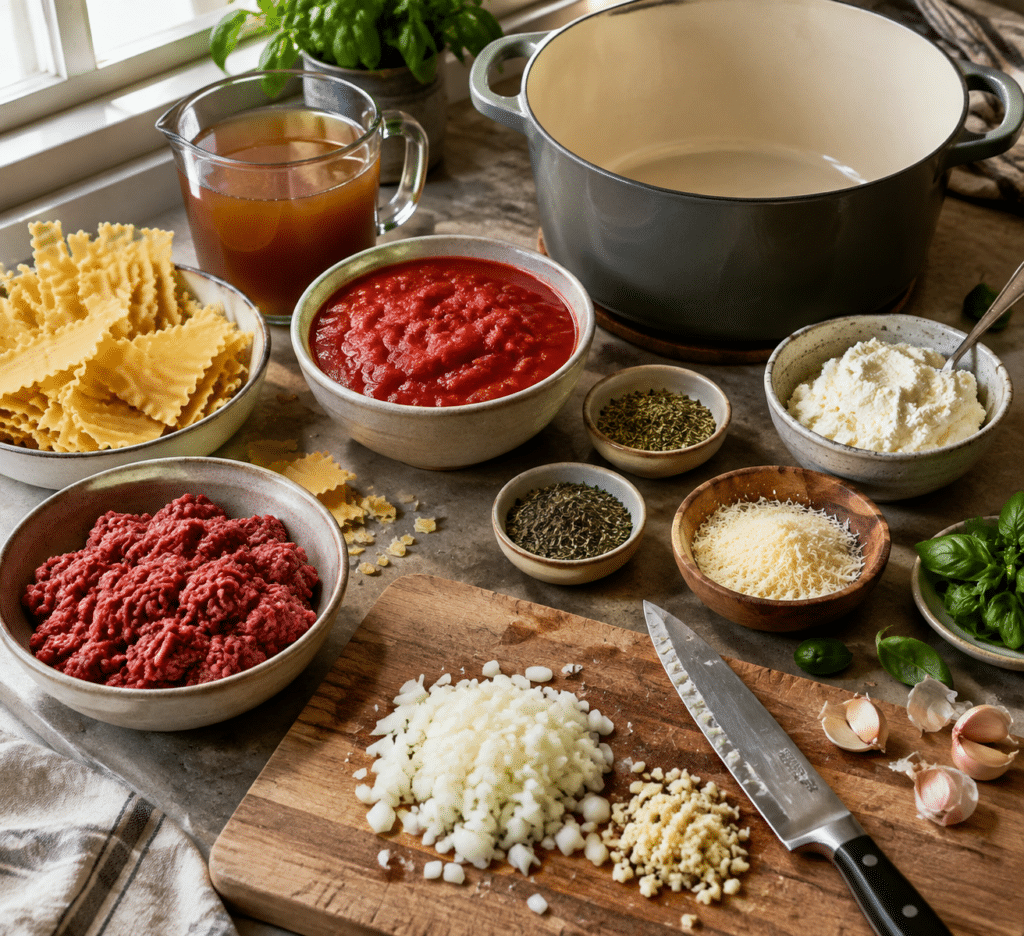
One thing I appreciate about this Lasagna Soup Recipe is that the ingredient list doesn’t send me searching through three different grocery aisles for something I’ll never use again. Most of what goes into the pot is familiar: ground beef, tomatoes, broth, pasta, garlic, onion, dried herbs, and cheese. Simple ingredients, yes, but each one has a job to do.
For the original recipe, you’ll need:
- 1 tablespoon extra virgin olive oil
- 1 pound ground beef
- 1/2 cup diced onion
- 2 tablespoons minced garlic
- 1 can, 28 ounces, crushed tomatoes
- 1 dried bay leaf
- 1 teaspoon dried basil
- 1 teaspoon dried oregano
- 1 teaspoon dried parsley
- 1/2 teaspoon black pepper
- 1/4 teaspoon red pepper flakes
- 1 quart low-sodium beef broth
- 2 cups water
- 2 cups dry reginetti pasta or broken lasagna noodles, about 5 ounces
- 1/4 cup grated Parmesan, optional
- 1/4 cup ricotta, optional
Choosing the Beef, Tomatoes, and Broth
Ground beef gives this soup much of its hearty lasagna character. The original recipe uses 85/15 beef, which provides enough fat for flavor without making the broth excessively greasy. Leaner ground beef can work too.
Then come the crushed tomatoes. They form the tomato-rich backbone of the soup, while beef broth and water loosen everything into something you can actually eat with a spoon. I’d stick with low-sodium broth when possible because it gives you more control over the final seasoning.
And don’t underestimate the onion, garlic, basil, oregano, parsley, and bay leaf. They may look like background ingredients, but without them you’d essentially have beef, pasta, and tomato broth. Not quite the comforting Italian soup recipe we’re aiming for.
What Pasta Is Best for Lasagna Soup?
Broken lasagna noodles are the obvious choice, and they make every spoonful feel a little more like traditional lasagna. The original recipe also recommends reginetti, mafalda, or farfalle.
Here’s where I’d resist the urge to add extra pasta. It looks like there’s plenty of broth at first, so another handful can seem harmless. But pasta keeps absorbing liquid as it cooks and even after the pot comes off the stove. Suddenly your one pot lasagna soup can become very thick.
Ricotta and Parmesan finish the bowl rather than cooking into the base. Ricotta adds that creamy lasagna-like bite, while Parmesan contributes a salty, savory finish. Mozzarella can also be used as a topping if that’s what you already have.
Can I Substitute Ingredients in This Lasagna Soup Recipe?
Yes. The original Lasagna Soup Recipe is fairly flexible. Tomato puree or canned tomato sauce can replace crushed tomatoes, although jarred pasta sauce isn’t recommended because it may make the finished soup too salty. Beef, chicken, or vegetable broth can be used, and fresh herbs can replace dried herbs by using roughly twice the quantity.
The cheeses are flexible too. Use ricotta, Parmesan, mozzarella, a dairy-free alternative, or leave the cheese off entirely.
That’s part of the appeal here. You don’t need a perfectly stocked kitchen to get dinner started. Get the beef, tomatoes, broth, pasta, and seasonings right, and you’ve already built the foundation of a very comforting bowl.
How to Make Lasagna Soup on the Stove Top
Making this Lasagna Soup Recipe on the stove top is surprisingly straightforward. There’s no separate pan for the sauce and no baking dish waiting in the sink afterward. You build the flavor in one pot, add the pasta directly to the broth, and let the stove handle the rest.
The only part I’d pay close attention to is the pasta. I’ve learned that soup noodles have a sneaky habit of looking slightly underdone one minute and becoming too soft while you’re setting the table. That’s why this recipe intentionally stops cooking them earlier than you might expect.
Step-by-Step One Pot Lasagna Soup
- Brown the ground beef. Heat 1 tablespoon of olive oil in a large pot over medium-high heat. Add the ground beef and cook for about 10 minutes, breaking it into smaller pieces with a spatula as it browns.
- Add the aromatics. Stir in the diced onion and minced garlic. Sauté for another 3 minutes, just until the onion begins to soften and everything smells, well, like dinner is officially happening.
- Build the tomato broth. Add the crushed tomatoes, bay leaf, basil, oregano, parsley, black pepper, red pepper flakes, beef broth, and water. Stir everything together and cover the pot.
- Bring it to a boil. Increase the heat and allow the soup to come to a boil, stirring every few minutes to prevent anything from sticking. The original recipe notes that this takes approximately 10 minutes.
- Cook the pasta. Once the broth is boiling, add the dry pasta and reduce the heat to medium. Cook uncovered for half the cooking time stated on the pasta package, stirring occasionally. This intentionally leaves the noodles slightly undercooked.
- Let the soup rest. Remove the pot from the heat and leave it uncovered for about 5 minutes. Take out the bay leaf, ladle the soup into bowls, and finish each serving with ricotta and Parmesan.
That’s it. From start to finish, the original Lasagna Soup Recipe takes approximately 40 minutes, including 10 minutes of prep and 30 minutes of cooking.
The Trick to Perfect Lasagna Noodles in Soup
Here’s the detail I wouldn’t skip: undercook the pasta.
It sounds slightly wrong when you’re standing over the stove looking at noodles that aren’t completely tender yet. Trust the process. Once the heat is turned off, the pasta continues cooking in the hot broth and absorbing liquid. Cooking it until perfectly tender before removing the pot from the stove can leave you with softer noodles and considerably less broth later.
If you already know there will be leftovers, there’s an even better option. Cook the pasta separately and add it to individual bowls when serving. The original author specifically recommends this method for leftovers because noodles stored directly in the soup continue soaking up broth overnight and can become mushy.
How Long Does Lasagna Soup Take on the Stove Top?
This lasagna soup stove top method takes about 40 minutes total, with approximately 10 minutes of preparation and 30 minutes of cooking. Most of that time is simple browning, simmering, and cooking the pasta, so there’s no complicated technique involved.
And when that spoonful of ricotta starts melting into the hot tomato broth? That’s the point where this stops feeling like a shortcut and starts feeling like exactly what you wanted for dinner.
Tips for the Best Lasagna Soup Recipe
A Lasagna Soup Recipe looks pretty forgiving, and for the most part, it is. Still, a few small decisions can change the final bowl quite a bit. Pasta can soak up more broth than expected, the soup can become thicker while sitting, and cheese can either give you that creamy lasagna finish or disappear into the background.
I’ve found the biggest mistake is treating this like an ordinary pasta dish. You’re not trying to cook the noodles until they’re perfectly tender in the pot. You’re trying to stop just before that point because the hot broth keeps doing its job even after you turn off the stove.
Here are the details worth remembering:
- Slightly undercook the pasta so it stays pleasantly firm.
- Stir occasionally after adding the noodles to prevent sticking.
- Use low-sodium broth so you can control the seasoning.
- Keep extra broth nearby if you prefer a thinner soup.
- Add ricotta and Parmesan when serving rather than relying on them to flavor the entire pot.
- Cook the pasta separately if you’re deliberately making leftovers.
Keep an Eye on the Broth-to-Pasta Balance
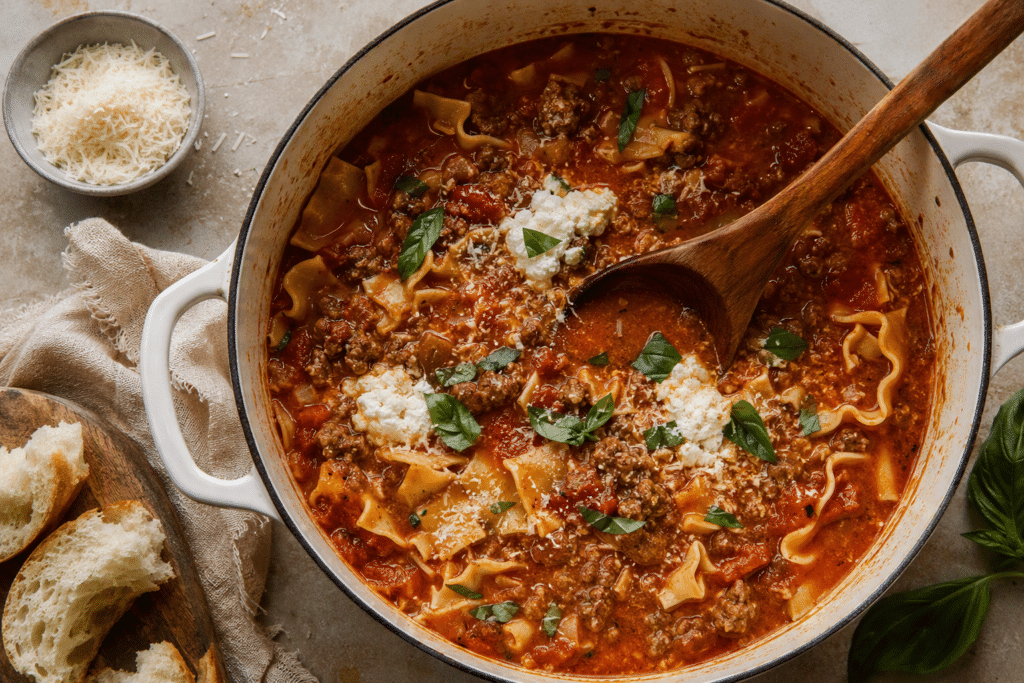
Have you ever put a beautiful soup in the refrigerator and opened the container the next day to find something that looks suspiciously like pasta casserole? That can happen here.
The noodles continue absorbing liquid as the lasagna soup sits. The original recipe specifically warns that cooking pasta directly in the soup can lead to mushier noodles and reduced broth when stored overnight.
For dinner tonight, cooking everything together makes sense and keeps this firmly in the one pot meals category. If you’re meal prepping, though, I’d change course and cook the noodles separately. Store them apart from the soup, then combine the two when reheating.
And if the soup simply becomes thicker than you wanted? Don’t panic. The original recipe suggests adding more broth until you reach the consistency you like.
Let the Cheese Finish the Bowl
Ricotta is optional in the original recipe, but it changes the experience. A spoonful sitting on top gives you little creamy pockets as you eat rather than making every spoonful taste exactly the same. Parmesan adds another savory layer, while mozzarella is also suggested as an alternative topping.
I prefer adding the cheese to individual bowls for another reason: everyone gets to decide what “cheesy enough” means. And, let’s be honest, that definition varies wildly from one person to another.
Fresh basil and cracked black pepper can also be added at serving time. They’re simple finishing touches, but they help brighten a rich tomato and beef broth.
Why Is My Lasagna Soup Too Thick?
Your Lasagna Soup Recipe will usually become thick when the pasta absorbs a large amount of broth, especially after the soup rests or is refrigerated. The easiest fix is to stir in additional broth while reheating until the consistency returns to where you want it.
For planned leftovers, prevent the problem by cooking and storing the pasta separately.
It’s a small adjustment, but probably the one I’d remember above everything else. You can tweak the cheese, swap the pasta shape, or add another splash of broth without much trouble. Overcooked, broth-soaked noodles? Those are considerably harder to rescue.
Creamy Lasagna Soup and Other Easy Variations
One reason I keep recipes like this Lasagna Soup Recipe around is that they leave room for improvisation. Maybe you open the fridge and find ground chicken instead of beef. Maybe someone at the table wants extra cheese. Or perhaps you’re halfway through making dinner and suddenly think, “Wouldn’t this be even better if it were creamier?”
Probably. And fortunately, you don’t have to reinvent the entire recipe to get there.
The original version already allows several substitutions, including different broths, pasta shapes, cheeses, and meat alternatives. The variations below build on that flexibility. Some go beyond the tested original recipe, so think of them as adaptation ideas rather than exact substitutions from the source.
Creamy Lasagna Soup
For a creamy lasagna soup, I’d actually start with the easiest change first: be generous with the ricotta.
Instead of immediately changing the tomato broth, spoon ricotta into each hot bowl and gently swirl it through the soup. The original recipe already includes ricotta as an optional topping, along with Parmesan or mozzarella. As the ricotta meets the hot broth, you get creamy bites while keeping the tomato flavor that makes the soup taste like lasagna.
If you want the entire broth creamy rather than just the individual spoonfuls, a small amount of cream could be stirred in near the end. That would be an adaptation, though, since cream isn’t included in the supplied recipe.
Chicken Lasagna Soup
What about chicken lasagna soup?
The original author notes that ground turkey or ground chicken hasn’t been tested in this particular recipe but suggests either could work well. If experimenting with ground chicken, cook it thoroughly in place of the beef, then continue with the onion, garlic, tomatoes, herbs, and pasta.
I’d pair chicken with chicken broth rather than beef broth for a lighter flavor profile. Conveniently, the original recipe already says chicken, beef, and vegetable broth can be used interchangeably in the soup.
Just keep in mind that this becomes a variation of the original, not the exact tested recipe.
Creamy Alfredo Lasagna Soup
A creamy Alfredo lasagna soup is a much bigger departure.
Traditional Alfredo-style flavors move away from the tomato-heavy character of this recipe toward a creamy, cheesy base. So I wouldn’t simply pour Alfredo sauce into the original pot and hope for the best. You’d likely need to rethink the liquid and seasoning balance, and chicken would make more sense than beef for many versions.
In other words, it sounds delicious, but it deserves to be treated as its own recipe rather than disguised as a tiny substitution.
Vegetarian Lasagna Soup
The vegetarian route is simpler. The original recipe suggests replacing the ground beef with cooked lentils or a ground-beef alternative, with cooking time adjusted accordingly. Vegetable broth can replace the beef broth, and dairy-free cheese can be used or the cheese can simply be omitted.
That gives you the tomato, pasta, garlic, onion, and Italian herb foundation while making the meal meat-free.
Can You Change the Meat in a Lasagna Soup Recipe?
Yes, but different proteins may require adjustments. The supplied Lasagna Soup Recipe uses ground beef, while its substitution notes suggest ground turkey, ground chicken, sausage, cooked lentils, or a meat substitute as possible alternatives. The author specifically notes that turkey and chicken weren’t tested in the original recipe.
That distinction matters. Swapping one ingredient is easy; promising that every variation behaves identically is another story.
I’d use the beef version when you want the classic, hearty bowl, then experiment from there. After all, a flexible recipe is useful precisely because you can make it your own without pretending every experiment was part of the original plan.
Is This Lasagna Soup Recipe a High Protein Dinner?
If you’re searching for healthy high protein meals, you might not immediately think of lasagna. I certainly don’t hear the word “lasagna” and picture a protein-focused dinner first. But this Lasagna Soup Recipe is a little more interesting than the name suggests.
According to the original recipe’s nutrition information, one 3.5-cup serving contains approximately 28 grams of protein, 432 calories, 38 grams of carbohydrates, and 18 grams of fat. Much of that protein comes from the pound of ground beef used across four servings, with Parmesan and ricotta contributing a little more when added.
Does that automatically make it the perfect dinner for everyone? Of course not. Nutritional needs vary. But if your goal is simply to find a filling high protein dinner that still feels like comfort food, this one gives you a useful middle ground.
Why This Soup Feels So Satisfying
Protein is only part of the story here. The combination of ground beef, pasta, tomato broth, and optional cheese gives the meal more substance than a light broth-based soup.
And I think that matters on busy evenings. You know those dinners where you finish eating and somehow find yourself standing in front of the refrigerator 45 minutes later? I’d rather make something substantial enough that dinner actually feels finished.
The original recipe uses 85/15 ground beef, although leaner beef can also be substituted based on preference. That flexibility is handy if you’re working this recipe into your usual rotation of high protein recipes.
There’s no need to turn the bowl into a complicated “fitness meal,” either. It can still be what it was supposed to be: warm, cheesy lasagna soup that happens to provide a meaningful amount of protein.
How to Build a Balanced Dinner Around Lasagna Soup
Honestly, I’d keep the sides simple. The soup already contains meat, pasta, tomatoes, and optional cheese, so piling several heavy dishes beside it can feel unnecessary.
The original article suggests serving the soup with bread or breadsticks, Parmesan, fresh basil, cracked black pepper, or a salad. For a weeknight meal, a fresh salad or vegetables can provide a lighter contrast to the rich tomato broth and ricotta.
If you’re specifically prioritizing protein, stick with the ground beef base rather than reducing the meat substantially. Beyond that, I wouldn’t overthink it. A Lasagna Soup Recipe is still supposed to make you look forward to dinner.
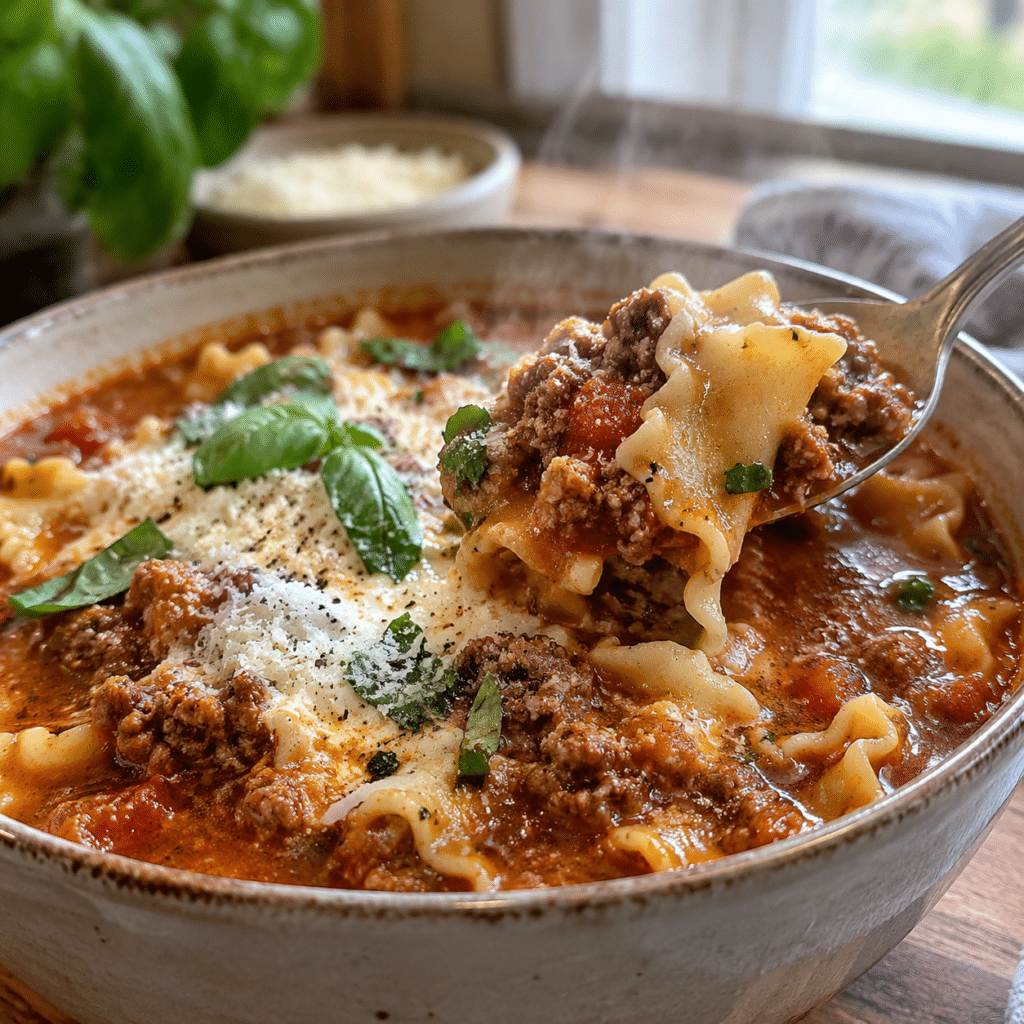
How Much Protein Is in Lasagna Soup?
The supplied Lasagna Soup Recipe provides approximately 28 grams of protein per 3.5-cup serving, based on four servings per batch. Each serving is listed at about 432 calories.
Those figures apply to the original recipe as provided. Changing the type or quantity of meat, pasta, broth, or cheese will change the nutritional values.
That last point is worth remembering because recipe nutrition can look wonderfully precise on a screen, while our actual bowls rarely are. Maybe you add extra ricotta. Maybe your serving is smaller. Maybe someone takes more beef from the pot than everyone else. It happens.
So I’d treat the nutrition numbers as a helpful reference rather than letting them overshadow the main reason to make this soup: it’s a practical, protein-rich dinner that brings the comfort of lasagna to the table without all the layering and baking.
What to Serve With This Lasagna Soup Recipe
This Lasagna Soup Recipe can absolutely stand on its own. With ground beef, pasta, tomatoes, and cheese all sharing the same bowl, it already feels like a complete dinner. Still, there are nights when putting one lonely pot in the middle of the table feels a little too simple. I get it. Sometimes you want something to tear, dip, or crunch alongside all that warm tomato broth.
My first choice? Bread. Nothing complicated. A thick slice of crusty bread gives you something to drag through the broth at the bottom of the bowl, while breadsticks make the meal feel a little more like the Italian-inspired comfort dinner you were probably craving in the first place.
The original recipe also recommends bread or breadsticks, plenty of Parmesan, fresh basil, cracked black pepper, and salad as serving options.
Easy Sides for Lasagna Soup
For easy supper ideas, I’d choose the side based on how hungry everyone is.
If the soup is doing most of the work, try:
The original article specifically suggests an apple walnut salad or strawberry goat cheese salad as additional pairings. Both bring something fresh to a meal that can otherwise lean pretty heavily into pasta, beef, and cheese.
Personally, I like the contrast of a crisp salad. A bite of cool greens between spoonfuls of hot one pot lasagna soup keeps the meal from feeling overly rich. But on a cold evening? Actually, forget the salad for a second. Give me warm bread, extra ricotta, and a bowl big enough that I don’t have to immediately return to the pot.
That’s the nice thing about easy soup recipes like this. Dinner doesn’t need an elaborate supporting cast.
Don’t Forget the Lasagna-Style Toppings
The toppings are where you can make each bowl feel different.
Ricotta is the obvious choice because it gives you that creamy cheese element associated with traditional lasagna. Parmesan adds a sharper, savory finish, while mozzarella can also be used. The original recipe allows all three and notes that dairy-free cheese or no cheese at all can work when needed.
I’d put the toppings on the table and let everyone build their own bowl. Someone will want a modest sprinkle of Parmesan. Someone else will create a ricotta mountain. There is always that person.
Fresh basil is especially good when you want to brighten the tomato flavor without changing the soup itself.
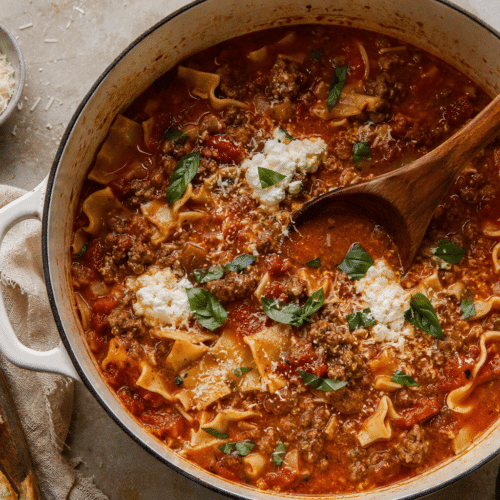
Easy Lasagna Soup Recipe: Cozy One Pot Dinner

Ingredients
- 1 tablespoon extra virgin olive oil
- 1 pound ground beef
- 1/2 cup diced onion
- 2 tablespoons minced garlic
- 1 can 28 ounces crushed tomatoes
- 1 dried bay leaf
- 1 teaspoon dried basil
- 1 teaspoon dried oregano
- 1 teaspoon dried parsley
- 1/2 teaspoon black pepper
- 1/4 teaspoon red pepper flakes
- 1 quart low-sodium beef broth
- 2 cups water
- 2 cups dry reginetti pasta or broken lasagna noodles about 5 ounces
- 1/4 cup grated Parmesan optional for serving
- 1/4 cup ricotta optional for serving
Instructions
- Heat the olive oil in a large pot over medium-high heat. Add the ground beef and cook for about 10 minutes, breaking it apart with a spatula as it browns.
- Add the diced onion and minced garlic. Sauté for about 3 minutes.
- Stir in the crushed tomatoes, bay leaf, basil, oregano, parsley, black pepper, red pepper flakes, beef broth, and water.
- Cover the pot and increase the heat to bring the soup to a boil. Stir every few minutes to prevent sticking. It should take approximately 10 minutes to reach a boil.
- Add the dry pasta and stir. Reduce the heat to medium and cook uncovered for half the cooking time recommended on the pasta package, stirring occasionally.
- Remove the pot from the heat while the pasta is still slightly undercooked. Let the lasagna soup rest uncovered for 5 minutes so the noodles can continue cooking in the hot broth.
- Remove and discard the bay leaf. Ladle the soup into bowls and top with ricotta and Parmesan before serving.
Notes
- Slightly undercook the pasta because it will continue softening and absorbing broth after the soup comes off the heat.
- If the soup becomes too thick, add more broth until it reaches your preferred consistency.
- For planned leftovers, cook the pasta separately and add it to individual servings. This helps prevent soggy noodles.
- Ground turkey, ground chicken, sausage, cooked lentils, or a meat substitute can be considered as variations, although the original author specifically notes that chicken and turkey were not tested.
- Ricotta, Parmesan, or mozzarella can be used for serving.
- Refrigerate leftovers in an airtight container for up to 4 days.
- Freeze for up to 3 months.
What Goes Best With Lasagna Soup?
Bread, breadsticks, fresh salad, Parmesan, ricotta, basil, and cracked black pepper all pair naturally with a Lasagna Soup Recipe. For a lighter meal, choose salad; for a heartier dinner, serve warm bread alongside the soup.
You don’t really need much more. That’s partly why this recipe works among practical one pot meals and weeknight supper ideas. The soup carries dinner by itself, while a simple side makes the table feel complete.
And if everyone ends up ignoring the salad and dipping bread straight into the pot? Well, I wouldn’t call that a failed dinner.
How to Store, Freeze, and Reheat Lasagna Soup
This Lasagna Soup Recipe makes great leftovers, but there’s one thing I wish someone had emphasized the first time I stored a pasta soup: the noodles don’t stop drinking just because dinner is over.
Put the whole pot in the refrigerator overnight and those perfectly tender noodles continue absorbing the tomato broth. By lunch the next day, you may open the container expecting soup and find something much thicker. Still delicious? Usually, yes. Exactly what you planned? Probably not.
The original recipe recommends storing lasagna soup in an airtight container in the refrigerator for up to four days. It can also be frozen for up to three months. The trick is deciding what to do with the pasta before you store it.
The Best Way to Store Lasagna Soup
If you know you’ll have leftovers, cook the pasta separately from the soup and store the two in separate airtight containers.
I know, technically that takes away a little of the magic of one pot lasagna soup. But I’d rather wash one extra saucepan than spend the next three days eating increasingly swollen noodles.
The original author makes the same recommendation specifically because pasta left in the soup overnight absorbs broth and can become mushy. When you’re ready to eat, simply combine the amount of pasta and soup you need.
Already cooked everything together? No problem. Store the leftovers as they are. Just expect the soup to thicken and keep some broth handy for reheating.
I’d also store ricotta, Parmesan, mozzarella, and fresh basil separately. Add those after reheating so the toppings still feel fresh rather than disappearing into the stored soup.
Freezing Lasagna Soup Without Ruining the Pasta
The original Lasagna Soup Recipe can be frozen for up to three months.
For the best texture, though, I’d freeze the soup base without pasta whenever you’re preparing a batch specifically for the freezer. Pasta can soften considerably after sitting in liquid, freezing, thawing, and then being heated again.
Let the soup cool, portion it into freezer-safe containers, and leave enough room for expansion. Freeze the tomato and beef soup base, then cook fresh pasta when you’re ready to serve it.
It requires an extra few minutes later, but the difference in noodle texture is worth it.
If you freeze individual portions, follow USDA guidance for safely thawing leftovers before reheating.
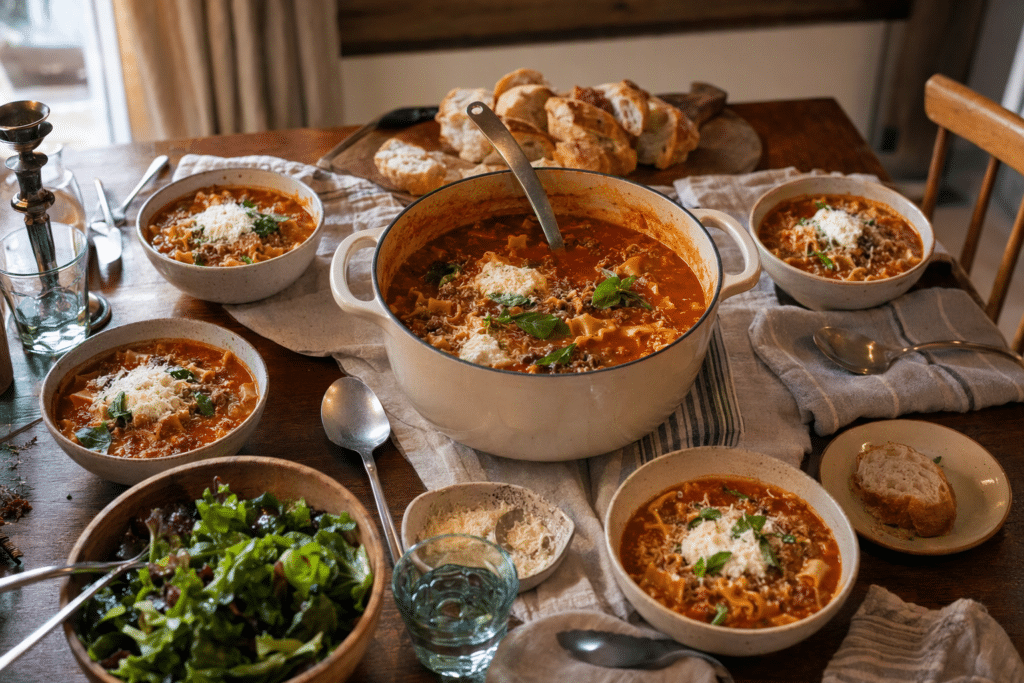
Reheating Lasagna Soup
Reheating is straightforward. The original recipe recommends microwaving leftovers for 1 to 2 minutes or warming them in a pot on the stove until heated through.
Before reheating, look at the consistency. If the pasta has absorbed much of the liquid, stir in a splash of broth. Add a little at first, heat the soup, then decide whether it needs more.
Once everything is hot, finish your bowl with fresh ricotta, Parmesan, basil, or black pepper.
That little finishing step makes leftovers feel much closer to the first-night version. And on a busy evening, realizing there’s already a container of homemade lasagna soup waiting in the refrigerator is a pretty good feeling.
Final Thoughts on This Easy Lasagna Soup Recipe
Some dinners are worth spending an afternoon on. This isn’t supposed to be one of them, and I think that’s exactly why it works. You get the familiar comfort of beef, tomatoes, pasta, Italian herbs, ricotta, and Parmesan without layering traditional lasagna or waiting for a casserole to bake.
What I like most is how easily this recipe fits real family life. Make it in one pot on a busy school night, cook the noodles separately when you’re planning leftovers, or let everyone customize their own bowl with ricotta, Parmesan, and fresh basil.
And maybe that’s the best part of this Lasagna Soup Recipe. It’s the kind of dinner that gets everyone around the table with steaming bowls, bread being passed back and forth, and someone inevitably asking for seconds. Nothing fancy, nothing complicated. Just warm, comforting food shared with the people you love, which is often exactly what a family dinner should be.
Lasagna Soup Recipe FAQs
Even though this Lasagna Soup Recipe is pretty straightforward, pasta soup has a few quirks. Most of them come down to the same issue: noodles keep absorbing liquid long after you think they’re finished cooking. Then there are the practical questions about substitutions, freezing, and making the soup creamier.
Here are the answers I’d want before putting the pot on the stove.
1.Can I Cook Lasagna Noodles Directly in the Soup?
Yes. The original recipe adds dry pasta directly to the boiling soup, then cooks it uncovered over medium heat for half the cooking time recommended on the pasta package. The soup is removed from the heat and allowed to rest for five minutes, during which the pasta continues cooking and absorbing broth.
If you’re planning leftovers, however, cooking the pasta separately is a better option. It helps prevent overly soft noodles and excessive broth absorption during storage.
2.Why Does My Lasagna Soup Get So Thick?
Pasta absorbs broth while cooking and continues absorbing it as the soup sits. That means your lasagna soup can look perfectly brothy at dinner and noticeably thicker several hours later.
The original recipe recommends adding more broth according to your preferred consistency. For leftovers, storing cooked pasta separately is the easiest way to maintain a soupier texture.
3.What Pasta Is Best for Lasagna Soup?
The recipe uses reginetti pasta or broken lasagna noodles, but mafalda and farfalle are also suggested alternatives.
Broken lasagna noodles are a natural choice if you want each bowl to resemble traditional lasagna a little more closely. Whatever shape you choose, avoid overcooking it. Slightly firm pasta has some room to soften as it sits in the hot broth.
4.Can You Freeze Lasagna Soup?
Yes. The original Lasagna Soup Recipe can be frozen for up to three months.
For better pasta texture, though, freeze the soup base separately and prepare fresh noodles when you’re ready to eat. This avoids putting already-cooked pasta through storage, freezing, thawing, and reheating while submerged in broth.
5.Can I Use Ground Chicken Instead of Ground Beef?
The original author says ground chicken or ground turkey would likely work, although neither variation was tested for the supplied recipe. Ground sausage, cooked lentils, and meat substitutes are also suggested possibilities.
So yes, chicken lasagna soup is a reasonable variation, but I’d treat it as an adaptation rather than claiming it produces exactly the same result as the tested ground-beef version.
That distinction may sound small, but it matters. A good recipe should tell you where the reliable instructions end and where experimentation begins.